

Before Qatar. Before the 2021 Copa América. Before the magical night in Atlanta. Before the tears of joy and the unforgettable image of Lionel Messi finally lifting the FIFA World Cup. There was a night when it all seemed over. On June 26, 2016, in the corridors of MetLife Stadium in New Jersey, the greatest player of his generation announced that he would never wear the Argentina jersey again. Soccer loves stories with happy endings.
Today, Lionel Messi’s story feels almost inevitable: a World Cup champion, chasing a second consecutive world title, a two-time Copa América winner, and the unquestioned idol of an entire nation. Yet for a few weeks in 2016, none of that ending existed. His story had come to a halt with a missed penalty, deafening silence, and one sentence that echoed around the world.
“For me, the national team is over.”
At that moment, no one imagined those words would become merely the darkest chapter of a story that would eventually reshape the history of world soccer.
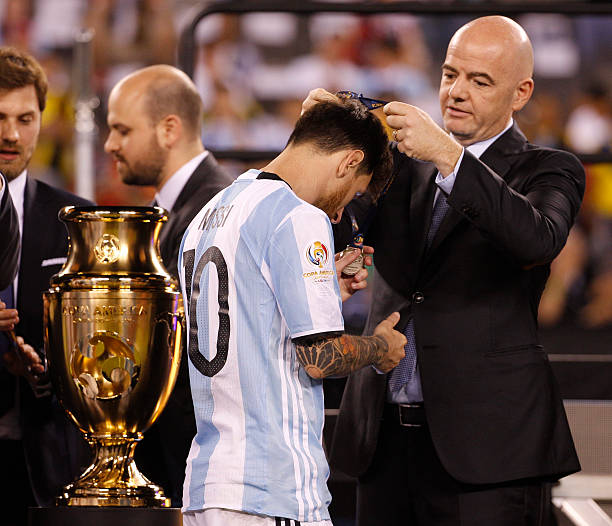
A fourth final lost
From the moment he debuted for the Albiceleste, Messi lived with a permanent paradox. He was adored at FC Barcelona, where he collected Ballon d’Or awards and UEFA Champions League trophies with astonishing regularity. Yet every time he wore Argentina’s colors, he found himself compared to Diego Maradona. The 2014 FIFA World Cup appeared destined to change that narrative. Messi carried Argentina all the way to the Final at the Maracanã before Mario Götze’s extra-time winner handed Germany the championship. Then came two more heartbreaks. In 2015, Chile defeated Argentina on penalties to win the Copa América. One year later, history repeated itself almost identically during the Copa América Centenario in the United States. Four major finals. Four defeats.
At just 29 years old, Messi already felt as though destiny had stubbornly refused to allow him to win a trophy with his country.
On June 26, 2016, more than 82,000 spectators filled MetLife Stadium. Argentina controlled much of the final against Chile but failed to find the breakthrough.
After 120 minutes, the match headed once again to a penalty shootout. Messi stepped forward first. A player who had almost never faltered from the spot opened his body too much. His shot sailed high over the crossbar. Minutes later, Francisco Silva converted Chile’s decisive penalty. Argentina collapsed. So did Messi. For many observers, that missed penalty represented far more than a technical mistake. It symbolized the crushing weight of more than a decade of pressure, criticism, and expectations that no player could realistically fulfill.
“For Me, It’s Over”
Moments after the final whistle, Messi walked through the stadium tunnels with a blank expression.
Standing before reporters, he delivered a few sentences that instantly became part of soccer history. He explained that the national team “wasn’t meant for him” and that his decision came “after losing four finals.” He spoke neither about physical exhaustion nor about needing a break. He spoke about failure. In his own mind, he had tried everything and still failed to bring a major trophy home to Argentina. At only 29 years old, the world’s best player announced his retirement from international soccer. The news sent shockwaves throughout Argentina.
A nation in shock
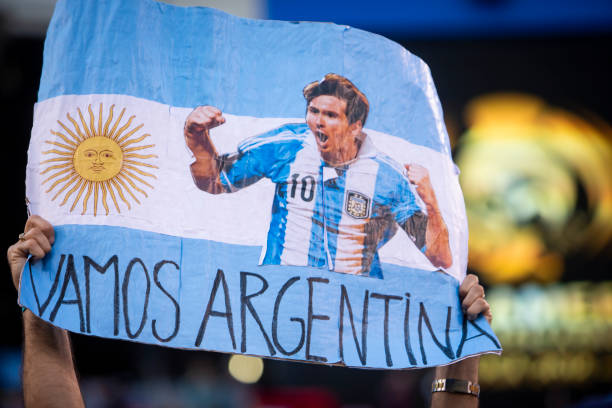
The following morning, every newspaper carried the same story.
The country refused to accept his decision. President Mauricio Macri personally called Messi and urged him to reconsider. Diego Maradona also publicly appealed for his return. Former internationals, federation officials, supporters, and ordinary citizens launched nationwide campaigns under one simple slogan: “No te vayas, Lío.” “Don’t leave, Leo.”
Crowds gathered outside the headquarters of the Argentine Football Association. Across social media, millions of supporters begged their captain to change his mind. Rarely has one athlete inspired such an extraordinary national mobilization. Argentina suddenly realized exactly what it stood to lose. For years, Messi had carried a level of pressure few athletes have ever experienced. Every international tournament became another national referendum on whether he could equal Diego Maradona. His patriotism was questioned because he had grown up in Spain.
His body language was endlessly scrutinized. Every lost final became further evidence—at least to his critics—that he would never become the national hero Argentina expected.
The missed penalty against Chile became the final straw.
For a brief moment, Messi appeared to accept the idea that nothing he ever accomplished would be enough.
The return that changed the history
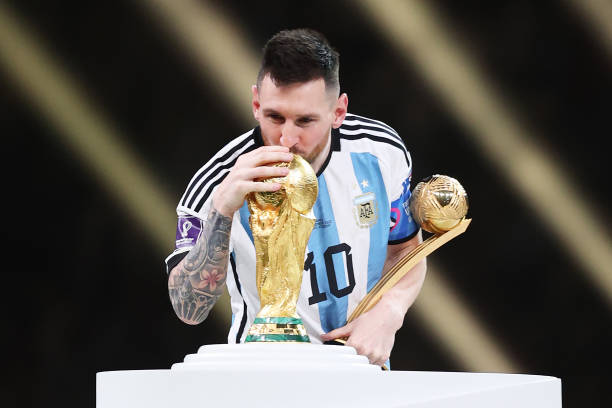
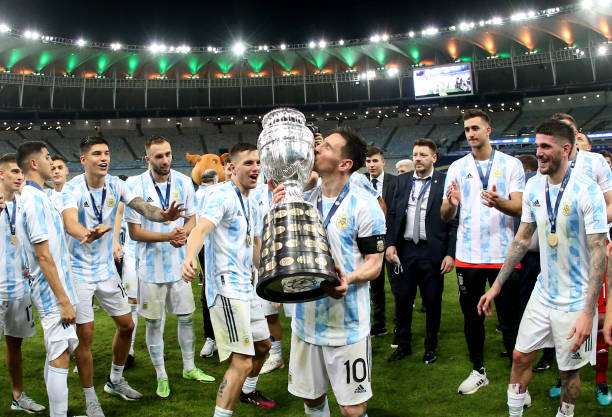
Yet his international retirement lasted only a matter of weeks.
In August 2016, after countless conversations with his family, those closest to him, and Argentina’s new head coach Edgardo Bauza, Messi announced that he would return.
He explained that he loved his country too much to leave that way and that he could not abandon his teammates. That decision changed the history of Argentine soccer forever. Because without that return, none of what followed would ever have happened. Not the 2021 Copa América triumph in Brazil, the first major international trophy of his career.
Not the 2022 Finalissima victory over Italy. And certainly not December 18, 2022, in Lusail, when Messi finally lifted the FIFA World Cup after one of the greatest finals the sport has ever witnessed against France.
His international journey did not end there. Messi continued wearing the Albiceleste jersey, captured another Copa América in 2024, and now finds himself chasing a second consecutive World Cup title—an achievement accomplished only by Pelé’s legendary Brazil. Looking back, Messi’s 2016 international retirement feels less like surrender than a breaking point. He did not walk away from Argentina because he no longer loved his country. He simply reached the limit of a burden he had carried for more than a decade. Ironically, it may have been only after hitting rock bottom that he found the strength to rise again.
Ten years later, the image of Messi leaving MetLife Stadium after announcing his retirement belongs to another era. It no longer represents the story of a genius incapable of winning with his country. Instead, it has become the opening chapter of perhaps the greatest redemption story any player has ever written in international soccer.
The stadium that marked the darkest moment of Messi’s career with Argentina may now witness his ultimate coronation as the greatest player in World Cup history. The answer will come this afternoon at 3 p.m.
 Argentina
 Lionel Messi