

Before becoming managers, they had already left an indelible mark on soccer history through their brilliance on the field. Ballon d’Or winners, World Cup champions, iconic captains, and club legends, they all appeared destined for a successful second career in the dugout. Yet the transition from the pitch to the technical area has never guaranteed success. While some, such as Didier Deschamps and Zinedine Zidane, proved they possessed managerial brilliance as well, others never came close to replicating the achievements they enjoyed as players. Here’s a look at some of the greatest players who became coaches, from spectacular success stories to mixed careers and memorable disappointments.
There conquered the dugout
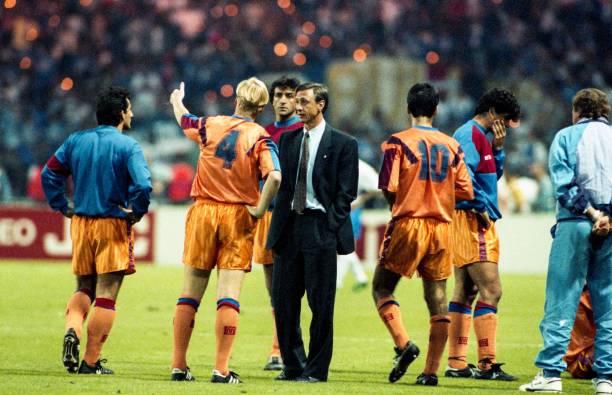
It is impossible not to begin with Johan Cruyff, whose influence extends far beyond his trophy cabinet. A legendary player for Ajax and FC Barcelona, he went on to transform Barcelona as head coach. Cruyff laid the foundations of modern positional play, a philosophy that has since influenced coaches around the world. In terms of silverware, he won four consecutive La Liga titles and delivered Barcelona’s first-ever European Cup in 1992.
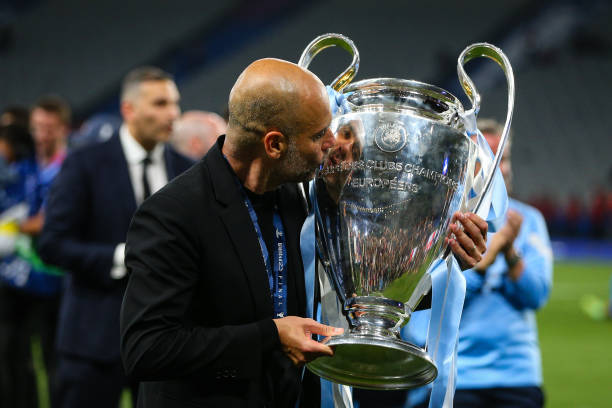
His disciple, Pep Guardiola, the former midfield conductor of Barcelona’s “Dream Team,” has become one of the most influential managers in soccer history, and his legacy continues to shape the modern game. Between Barcelona, Bayern Munich, and Manchester City, Guardiola has accumulated domestic and European trophies while revolutionizing tactical thinking.
Antonio Conte has also established himself as one of the game’s elite club managers, winning league titles with Juventus, Chelsea, and Inter Milan. At the international level, his tenure with Italy ended in the quarterfinals of UEFA Euro 2016, although the Azzurri impressed many observers with their tactical organization and defensive discipline.
Very few former players have reached the pinnacle of international soccer in both careers. Franz Beckenbauer is perhaps the ultimate example. After captaining West Germany to the 1974 FIFA World Cup title, he repeated the feat as head coach in 1990, having already guided Germany to the 1986 World Cup Final.
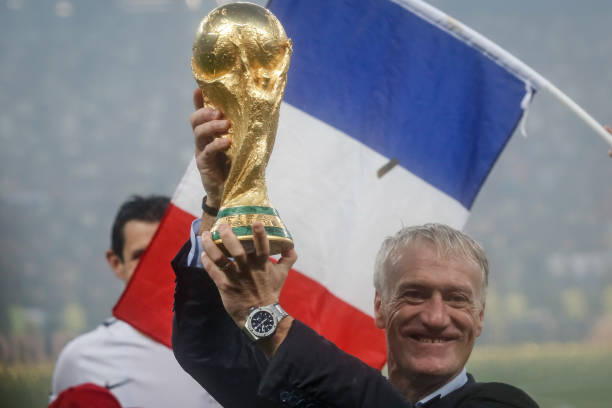
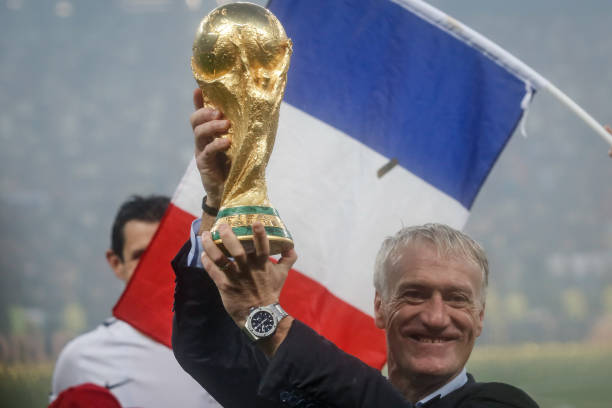
Another unavoidable reference is Didier Deschamps. After lifting the World Cup as France’s captain in 1998, he led Les Bleus to another world title twenty years later in Russia. His résumé also includes a runner-up finish at UEFA Euro 2016, victory in the 2021 UEFA Nations League, a second-place finish at the 2022 FIFA World Cup, and semifinal appearances in five of the seven major tournaments he managed. Those accomplishments have cemented his place among the greatest national team coaches in French soccer history.
Although he has never coached a national team, Zinedine Zidane established himself as one of the most successful managers of the 21st century. At Real Madrid, he accomplished something unprecedented by winning three consecutive UEFA Champions League titles between 2016 and 2018 while also capturing two La Liga championships. However, his managerial career has been on hold for five years, and with him widely expected to become France’s next head coach, questions remain about what form he will be in when he returns.
Respectable coaching skills but that fell short of greatness
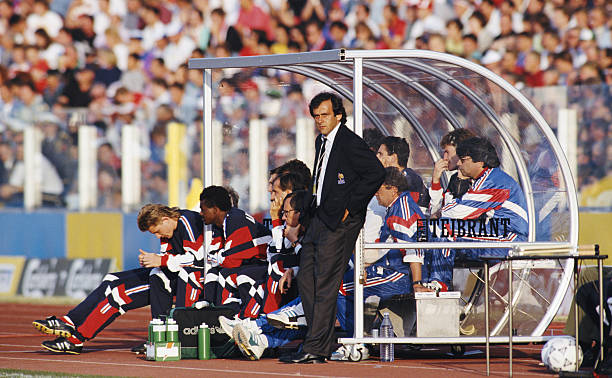
For several other legendary players, the transition into management produced more mixed results.
Marco van Basten, a three-time Ballon d’Or winner, enjoyed a promising start as head coach of the Netherlands by reaching the quarterfinals of UEFA Euro 2008. Despite implementing an attractive style of play, he never captured a major trophy, and his managerial career ultimately failed to take off.
The same can be said for Rudi Völler, who unexpectedly guided Germany to the 2002 FIFA World Cup Final. His tenure quickly lost momentum after Germany suffered a shocking group-stage elimination at UEFA Euro 2004.
Brazilian World Cup-winning captain Dunga enjoyed notable success by winning the 2007 Copa América and the 2009 FIFA Confederations Cup. Nevertheless, his spell is remembered primarily for Brazil’s quarterfinal elimination against the Netherlands at the 2010 World Cup, followed by a far less convincing second stint in charge.
Michel Platini, meanwhile, never truly pursued a managerial career. Following a brief spell with France’s Olympic team, he quickly shifted his focus toward soccer administration and governance.
Greatness doesn’t translate on the pitch
Conversely, several all-time great players failed to reproduce their success once they became coaches.
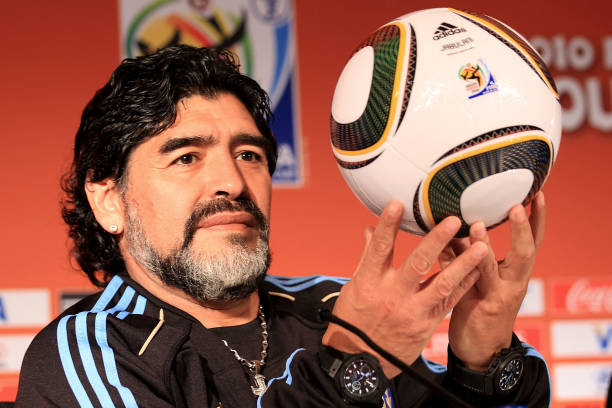
The most famous example is Diego Maradona. Appointed Argentina’s head coach before the 2010 FIFA World Cup, he guided La Albiceleste to the quarterfinals before suffering a crushing 4-0 defeat to Germany. Throughout his tenure, his tactical shortcomings and inexperience in squad management were frequently criticized.
Another Ballon d’Or winner, Lothar Matthäus, never established himself as a successful manager despite numerous opportunities with clubs and national teams, including Hungary and Bulgaria.
Clarence Seedorf, a four-time UEFA Champions League winner as a player, never managed to translate his exceptional soccer intelligence into coaching success. His spells with AC Milan, Deportivo La Coruña, and Cameroon all ended in disappointment.
The same applies to Hristo Stoichkov, Bulgaria’s hero at the 1994 FIFA World Cup, who was unable to guide his national team back to a major international tournament.
Finally, Alan Shearer, the Premier League’s all-time leading scorer, spent only a few weeks managing Newcastle United in 2009 and was unable to prevent the club from being relegated.