

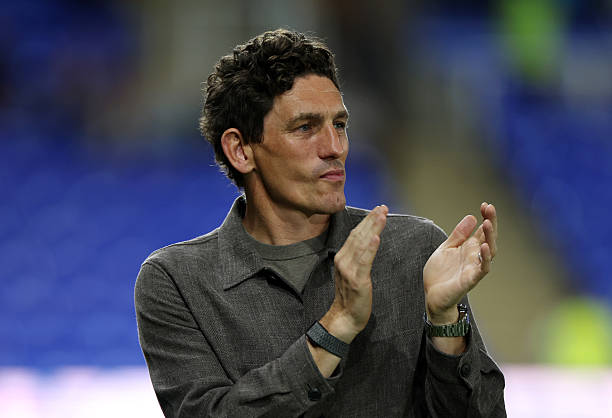
Just a few years ago, Keith Andrews was hardly the kind of name anyone would have expected to see on the bench of a Premier League club. A former Irish midfielder, assistant coach, set-piece specialist and television pundit, Andrews spent much of his career operating behind the scenes of English soccer. That was until Brentford decided to hand him the keys to its first team in the summer of 2025, following Thomas Frank’s departure.
From young captain to apprentice coach
The story begins in Dublin, where Keith Andrews was born in 1980. A midfielder, he moved to England at a young age and joined the Wolverhampton Wanderers academy. At just 21 years old, he even became the youngest Wolves captain in more than a century. It was an early responsibility that already said something about his character: Andrews was never the most spectacular player, but his leadership and understanding of the game quickly earned the trust of his coaches.
His playing career would then take him from Wolverhampton to Hull City, followed by Milton Keynes Dons, Blackburn, West Bromwich Albion and Bolton, with several loan spells along the way. It was at MK Dons that he would leave a real mark. As the club’s captain, he helped them earn promotion to the Championship in 2008 and scored the goal that sealed promotion. A few weeks later, he also scored the opening goal in the Football League Trophy final, which his team won at Wembley.
Andrews would also experience international soccer with Ireland. Between 2008 and 2012, he earned 35 caps and played at Euro 2012. Despite Ireland being eliminated in the group stage and Andrews being sent off in their final game against Italy, he was named Irish Player of the Year in 2012. His playing career was therefore anything but insignificant: it was the career of a hard-working midfielder who became a leader, accustomed to responsibility and environments where every detail matters.
But it was after hanging up his boots in 2015 that the story became truly interesting. Andrews returned to MK Dons to join Karl Robinson’s coaching staff. He then moved into the Irish national teams, first with the under-21s and later with Stephen Kenny’s senior side. In 2023, he joined Sheffield United as part of Chris Wilder’s coaching staff. A succession of experiences that allowed him to observe different working methods and different management styles before joining Brentford in 2024.
And that is where his career would take an unexpected turn.
The set piece specialist who became the boss
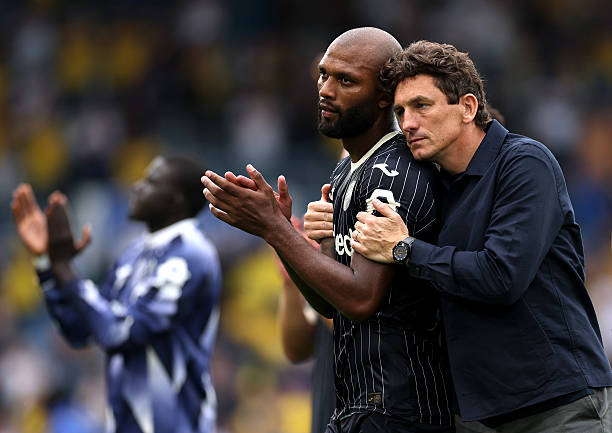
When he arrived at Brentford in 2024, Andrews was not hired to become Thomas Frank’s successor. His role was much more specific: he became the club’s set-piece coach. A position that might seem secondary in traditional soccer, but one that perfectly matched the evolution of the London club.
Brentford had built part of its identity around its ability to exploit details that other teams overlooked. Andrews quickly became one of the people responsible for perfecting that approach. During his first season, Brentford ranked third in the Premier League for Expected Goals generated from set pieces, with 16.71 xG, and joint-fifth for the number of goals scored from those situations, with 13 goals.
But his work went beyond corners and free kicks. Andrews notably innovated on kickoffs. Against Manchester City, Tottenham and then West Ham, Brentford scored three times within the opening 40 seconds by using the same idea: immediately accelerate down one side, look for a cross and use Kristoffer Ajer as a focal point to win the second balls. Three goals in three different games: it is difficult to see that as a simple coincidence.
This obsession with detail quickly changed the way Brentford viewed him. Andrews was no longer simply “the set-piece coach.” He worked individually with players, intervened on technical aspects and became increasingly involved in the team’s overall preparation. Nathan Collins explained that his former coach was a very different person on and off the field: a joker and approachable figure away from the pitch, but much more demanding and vocal when it came to training.
Then came Thomas Frank’s departure for Tottenham in June 2025.
Brentford could have looked for an outside coach, one with a more prestigious résumé and greater experience as a head coach. Instead, the club chose to remain faithful to its method: rather than taking part in the traditional coaching market, it promoted Andrews. Exactly as it had done with Thomas Frank in 2018, when he had never previously been a head coach.
The gamble was enormous. And nobody really knew what it would produce.
From TV pundit to Premier League coach
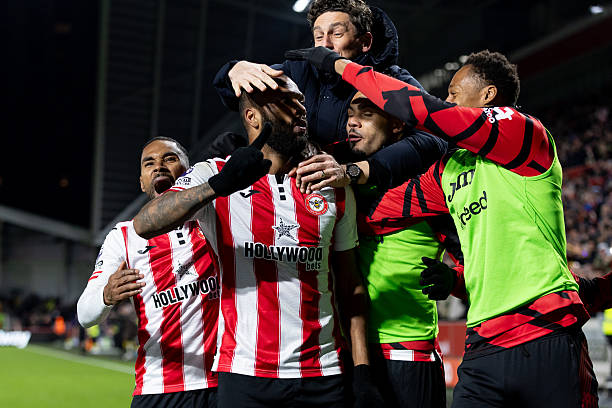
What makes Andrews’ story even more unusual is that he was not simply emerging from the shadows of a coaching staff. For several years, he had also become a familiar face in English soccer thanks to his television appearances. At the time of his appointment, some people knew him more as the former player and pundit capable of analyzing games on Sky Sports than as a future Premier League coach.
That is precisely what made his arrival so surprising. As Jonathan Wilson wrote in the Guardian, there was a degree of skepticism surrounding the idea of a man known to the general public as a pundit moving directly from being a member of a coaching staff to becoming the boss of a Premier League team. Especially since Brentford had just lost Thomas Frank, as well as several key players such as Bryan Mbeumo, Yoane Wissa, Christian Nørgaard and Mark Flekken.
Andrews therefore had to rebuild a team while proving that he was capable of making the leap from preparing one specific area of the game to taking responsibility for 25 players across an entire season.
Yet his Brentford does not look like a team managed by an inexperienced coach. The team primarily operates in a 4-2-3-1, but Andrews shows genuine flexibility in possession. His midfielders can drop between or alongside the center backs to create space, while the fullbacks push forward. The attacking players narrow their positions around the striker in order to create more options through the middle.
Above all, Brentford embraces direct soccer. After 27 matchdays of the 2025-26 season, the Bees were the Premier League team attempting the most long passes and ranked among those playing the most through balls. The principle is simple: move quickly toward the attacking line, use Igor Thiago’s physical strength and then take advantage of the movement of the players around him.
Out of possession, the same pragmatism dominates. Brentford does not necessarily look to press for 90 minutes. Andrews prefers to trigger pressure in specific situations: a misplaced pass, a poor first touch, players gathering around the ball or a set-piece situation. His team can also defend deeper before immediately accelerating when possession is regained.
And the results quickly gave weight to his ideas.
In just his second Premier League game, Brentford beat Aston Villa. They then picked up wins against Manchester United and Liverpool, as well as victories over Aston Villa and Newcastle. The Bees also took points against Arsenal and Chelsea. By mid-February 2026, they were sitting seventh in the league and dreaming of European soccer, despite the club having just lost its iconic coach and several of its key players.
Perhaps the most important part of Keith Andrews’ story is this: he did not really “come out of nowhere.”
His rise simply became visible when Brentford gave him power. Before that, he had been a captain at 21, an international player, an assistant coach, a member of several coaching staffs, a set-piece specialist and a television analyst. Each step had given him a different skill. And when he finally received his first Premier League head-coaching job, he had already spent years learning the profession from different angles.
Brentford therefore did not simply hand its team to a former TV pundit. The club trusted someone it had been able to observe every day, whose methods it knew and whose attention to detail it had already experienced firsthand.
Keith Andrews may not have been the name the soccer world expected to replace Thomas Frank. But at a club that has built its success on identifying profiles before they become obvious, his journey ultimately made perfect sense.
 Brentford