

Turkey’s soccer landscape has been caught in a financial paradox for several years. While Galatasaray, Fenerbahçe, Beşiktaş and Trabzonspor continue to carry substantial debts, these four institutions are still investing heavily in the transfer market. On the surface, the situation may seem incomprehensible: how can heavily indebted clubs continue to spend tens of millions of euros on high-profile players? In reality, this strategy reflects a specific economic and sporting logic. For these clubs, cutting spending also means taking the risk of losing titles, European revenue, sponsors and part of their appeal. Fenerbahçe, whose debt remains estimated at several hundred million euros, is a particularly telling example. The Istanbul club has spent nearly €90 million this summer, after already spending €120 million on transfers last season.
Pay to win
The first explanation is sporting. In Turkey, the four biggest clubs can hardly afford to go through a long rebuilding period. Galatasaray, Fenerbahçe, Beşiktaş and Trabzonspor represent a huge part of the country’s soccer history, fan base and commercial appeal. Their economic model therefore depends heavily on their ability to remain competitive at the top of the league and regularly participate in European competitions.
This necessity particularly explains Fenerbahçe’s spectacular strategy. The Istanbul club has gone through several seasons in which Galatasaray has established its dominance in the league. To reclaim the title, Fenerbahçe has therefore chosen to significantly strengthen its squad with high-profile players. The arrivals of players such as Mason Greenwood and Romelu Lukaku this summer, alongside N’Golo Kanté and Mattéo Guendouzi, illustrate this desire to immediately turn the team into a title contender. Fenerbahçe has spent close to €90 million this summer alone, according to Le Parisien, after spending another €120 million on the transfer market during the previous season.
The logic is simple: a costly signing is not merely an expense; it is seen as a way of buying additional chances to win. Winning the league can generate additional revenue, while qualifying for the Champions League can completely change the financial balance of a season. European competitions provide UEFA prize money, international exposure and additional commercial and matchday revenue.
This is particularly important in the current environment. The Turkish Süper Lig has become increasingly attractive to high-profile players. The arrival of international stars at Galatasaray, Fenerbahçe, Beşiktaş and Trabzonspor shows that the Turkish league is attempting to position itself as a credible alternative to other European markets.
The clubs are therefore accepting financial risk because they believe that not investing could sometimes be even more dangerous: losing the championship, missing out on European soccer and seeing the club’s appeal decline could lead to lower revenues and make the debt even harder to manage.
Debt doesn’t mean having not cash
The second key point is that debt and liquidity are not exactly the same thing. A club can be heavily indebted while still having, at a given moment, enough financial resources to invest in the transfer market.
This is precisely what the Turkish banking restructuring system, known as the “Bankalar Birliği,” demonstrates. Several major clubs were placed under financial restructuring agreements with Turkish banks. These arrangements allowed them to restructure and spread out certain debts, giving the clubs greater visibility over their repayments.
Fenerbahçe eventually managed to exit the Bankalar Birliği framework after settling the loans and interest covered by the agreement. That does not mean the club suddenly became debt-free. It does, however, give it greater freedom in managing its finances and allocating available cash.
The same principle can be seen at Galatasaray: leaving the Bankalar Birliği arrangement has provided the club with greater financial freedom, while also increasing the level of risk it is willing to take.
The clubs can also rely on other financial levers. Fenerbahçe, in particular, has used its real-estate assets, sponsorship deals, commercial revenues and various mechanisms to generate cash. The club has also significantly increased its registered capital ceiling, giving it additional possibilities to strengthen its financial structure.
The same principle applies to Beşiktaş. The club has sought to use sponsorship contracts and real-estate projects to gradually meet its financial obligations. Its leadership has notably referred to future revenues from real-estate developments and sponsorship deals as potential sources of funding for payments owed to banks.
The clubs are therefore not necessarily “paying for transfers with debt.” Instead, they are trying to move several different sources of revenue and assets around: sponsorships, real estate, television rights, ticket sales, player sales, European competition revenue and new investors. The debt remains enormous, but it can be restructured or repaid over several years while sporting investment produces immediate effects.
All in gamble : trying to turn spending into a virtuous cycle
The third explanation is probably the most important: Turkey’s four biggest clubs have adopted a form of “all-in” sporting strategy. They are taking financial risks today in the hope that sporting success tomorrow will precisely help solve their financial problems.
Fenerbahçe is the most spectacular example. Despite a debt estimated at several hundred million euros, the club continues to sign players capable of immediately improving its team. The objective is therefore not simply to collect big names: it is to build a squad capable of winning the league and, above all, qualifying for the Champions League. Fenerbahçe’s current European campaign, with the club now facing Lyon in the Champions League playoff round, shows just how financially important qualification can be. (leparisien.fr)
The reasoning can be summed up as follows: spending an additional €30 or €40 million may seem irresponsible when a club already carries hundreds of millions in debt; but if that spending helps secure European qualification, a title, new sponsors, greater matchday revenue and an increase in player values, it could theoretically help improve the club’s financial situation.
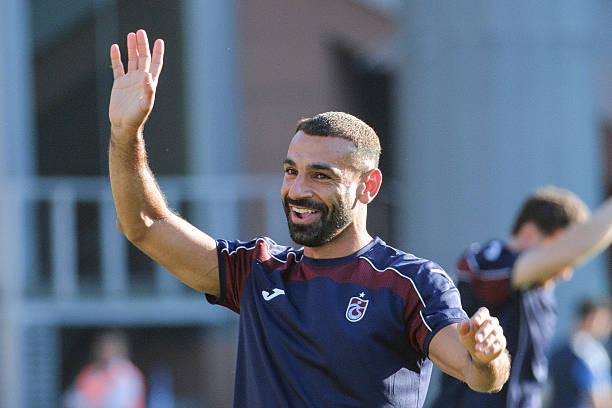
Trabzonspor illustrates this logic in an even more spectacular way with the arrival of Mohamed Salah. The club has been willing to make a considerable investment in a major international star despite still carrying substantial debt. Yet the arrival of a player of Salah’s stature could generate revenue well beyond the sporting side of the deal: jersey sales, ticketing, sponsorships, commercial rights, international visibility and increased interest in the club.
This creates a potential virtuous cycle:
big-name players → better results → European competitions → additional revenue → greater appeal → new sponsors and fans → ability to sign more players.
But there is obviously an opposite cycle: if the sporting results do not follow, the spending remains a major financial burden and the debt can continue to accumulate. That is the danger of the model.
Ultimately, Turkish soccer therefore operates under a permanent contradiction. The four major clubs know that they need to improve their finances, but they also know that an overly aggressive austerity policy could cause them to fall behind competitively. The transfer market consequently becomes a financial gamble as much as a sporting decision. Fenerbahçe, Galatasaray, Beşiktaş and Trabzonspor are not necessarily trying to eliminate their financial problems immediately; they are trying to regain enough sporting power to generate the revenue required for their financial recovery.
Their situation can therefore be summed up in one sentence: they are too heavily indebted to spend, but almost too important not to spend. Their size, fan bases, historic rivalries and European ambitions push them to keep taking risks. The real question is therefore not simply whether they can continue signing stars, but whether those stars will actually generate enough revenue to make the gamble pay off.