

Since its inception in 1930, the FIFA World Cup has been the stage for football’s greatest triumphs—but also for controversies that have sometimes overshadowed the game itself. Before the arrival of modern technology, refereeing mistakes could determine the fate of an entire nation. Some altered the course of football history, while others fueled conspiracy theories and endless debates for decades.
Argentina France 1930 : chaotic beginning for the refereeing in World Cup
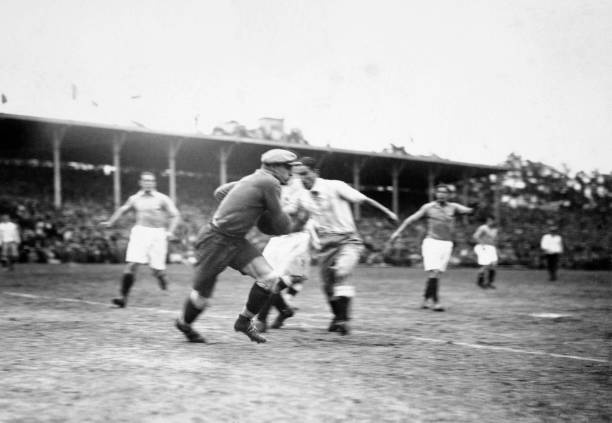
During the inaugural FIFA World Cup in Uruguay, both the rules and the organization were still far from modern standards.
Referees had very limited resources, protests were frequent, and several matches ended amid confusion.
The officiating of a number of games—including Argentina’s match against France and several fixtures during the knockout stage—triggered strong complaints from players and officials alike.
These early controversies reflected a tournament that was still finding its identity, at a time when referees were often left to manage enormous pressure with very little support.
The penalty nobody believed
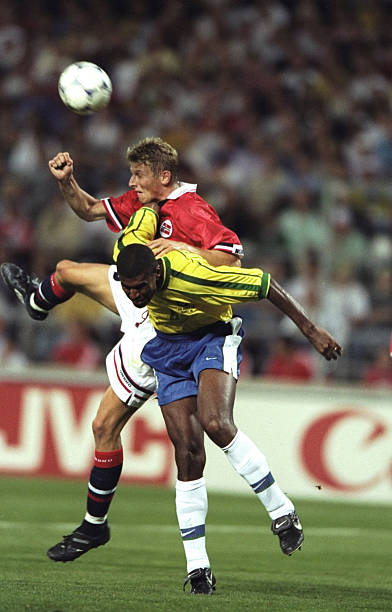
During the final Group A match, Norway was awarded a decisive penalty against Brazil.
Based on the television replays available at the time, many viewers believed the referee had invented the foul.
Media outlets around the world condemned the decision as a major refereeing error.
Several days later, however, newly released camera angles revealed that Brazilian defender Júnior Baiano had in fact pulled Tore André Flo’s jersey inside the penalty area.
The incident has since become a famous example of how television footage can sometimes mislead public opinion as much as it informs it.
The disgrace of Gijon 1982
Strictly speaking, this was not a refereeing mistake.
It was one of the greatest sporting scandals in World Cup history.
West Germany needed to defeat Austria by one or two goals to send both teams into the next round while eliminating Algeria.
After just ten minutes, Horst Hrubesch scored.
From that moment on, both teams virtually stopped playing. Sideways passes became constant, neither side seriously attempted to attack, and both appeared content with the result.
The crowd booed relentlessly. Journalists expressed outrage.
The referee, however, had no legal grounds to intervene.
The scandal became so significant that FIFA later decided all final group-stage matches would be played simultaneously to prevent similar situations from happening again.
When Schumacher escape punishement
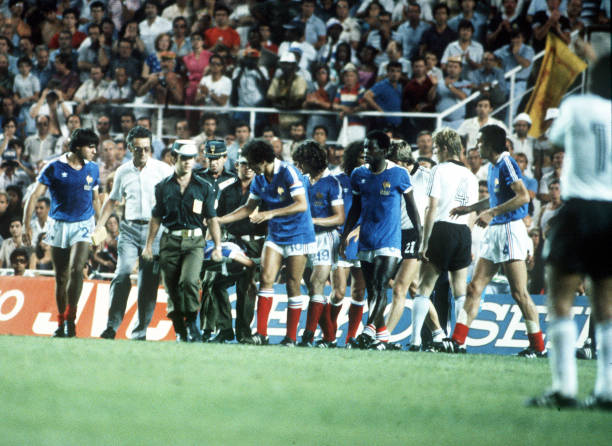
The semifinal in Seville remains one of the most famous matches in World Cup history.
It is also one of the most controversial.
In the 57th minute, Patrick Battiston broke through on goal before being violently taken out by West German goalkeeper Harald Schumacher, who charged into him at full speed.
Battiston was knocked unconscious, suffered a concussion, and lost several teeth.
The collision was extraordinarily violent.
Yet Dutch referee Charles Corver did not even award a foul. No yellow card. No red card.
The decision sparked worldwide outrage and remains one of the clearest examples of the limitations of refereeing before the introduction of video review.
When the ball cross the line but the goal isn’t accepted
In the Round of 16 at the 2010 FIFA World Cup in South Africa, England trailed Germany 2–1 when Frank Lampard unleashed a shot that struck the crossbar before clearly bouncing over the goal line.
The ball crossed the line by nearly two feet.
Everyone inside the stadium saw the goal. Millions watching on television saw it too.
Everyone except the referee and his assistant.
Play continued, the goal was not awarded, and England eventually lost 4–1.
The mistake became a historic turning point. Faced with overwhelming video evidence, FIFA accelerated discussions surrounding goal-line technology, which was introduced just a few years later.