

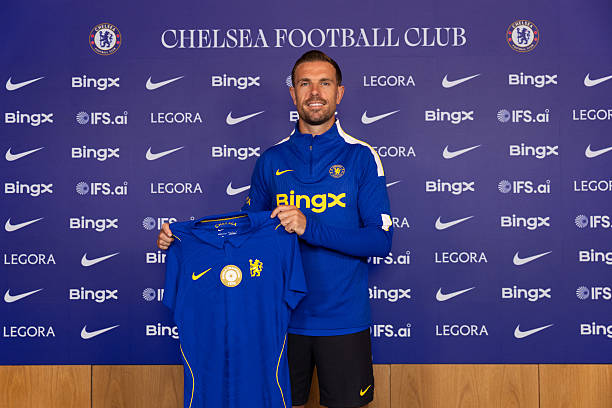
For the past three years, Chelsea has embodied the most aggressive youth recruitment strategy in European football. Under BlueCo’s ownership, the Blues have stockpiled high-potential young talent, investing heavily in players under the age of 23 with the goal of building a squad capable of dominating for the next decade. But the summer of 2026 marks a noticeable shift in direction. With the arrivals of Danny Welbeck (35) and Jordan Henderson (36), alongside more experienced signings such as Morgan Rogers and Maxence Lacroix, the club appears to have acknowledged the limitations of a project built almost exclusively around youth.
The limits of young squad
Since taking over the club in 2022, BlueCo has made youth development the cornerstone of Chelsea’s recruitment strategy. The signings of Cole Palmer, Moisés Caicedo, Roméo Lavia, Kendry Páez, Estevão, and Geovany Quenda all followed the same philosophy: invest early in elite young talent to maximize both sporting development and long-term market value.

That strategy, however, has revealed its weaknesses. Despite an abundance of talent, Chelsea has repeatedly struggled with a lack of maturity in crucial moments. Costly lapses in concentration, unnecessary red cards, difficulties managing difficult phases of matches, and the absence of true leadership figures in the dressing room have often proven expensive for the London club. Xabi Alonso, who took charge this summer, was determined to bring greater balance to a squad widely viewed as too young and lacking natural leaders.
The decisions to sign Danny Welbeck and Jordan Henderson therefore represent more than simply taking advantage of market opportunities—they reflect a philosophical shift. Neither England international has been recruited to become the face of Chelsea’s project. Instead, they are expected to provide something that millions spent on young talent could never buy: experience.
Mentors before starters

On the pitch, neither Jordan Henderson nor Danny Welbeck is expected to be an automatic starter. Their greatest value lies elsewhere.
Over more than a decade at Liverpool, Henderson established himself as one of the club’s greatest modern captains. Under Jürgen Klopp, his influence extended far beyond his individual performances. He served as the bridge between the coaching staff and the dressing room, demanded high standards in training, and embodied the culture of collective sacrifice that helped Liverpool win both the UEFA Champions League and the Premier League. That ability to elevate those around him is exactly what Chelsea is seeking today.
Welbeck offers a complementary profile. Having played for Manchester United, Arsenal, and Brighton, the English striker has built a reputation as an outstanding role model for younger teammates thanks to his professionalism, tactical intelligence, and selfless attitude. His extensive Premier League experience makes him an ideal mentor for João Pedro, Liam Delap, and Chelsea’s many emerging attacking talents. GOAL has even suggested that Chelsea views him as much more than a backup striker: they see him as a player capable of raising the daily standards of the entire squad.
In a team where many of the senior players are barely older than the academy graduates, Henderson and Welbeck are expected to become reference points both inside the dressing room and on the field. This evolution does not mean Chelsea is abandoning its commitment to developing young talent. On the contrary, the Blues are now attempting to make that model more sustainable.
The recent success of several elite European clubs has shown that truly competitive squads are rarely built on potential alone. Real Madrid relied on veterans such as Luka Modrić, Toni Kroos, and Nacho while nurturing the development of Vinícius Júnior, Rodrygo, and Jude Bellingham. Manchester City benefited from the leadership of Kyle Walker and İlkay Gündoğan during Phil Foden’s rise. Liverpool, meanwhile, built its new generation around Henderson, James Milner, and Virgil van Dijk.
Chelsea now appears eager to follow a similar blueprint. The objective is no longer simply to collect the world’s brightest young prospects, but to create the ideal environment for them to develop. Club executives also recognize that there are limits to this revised approach. A handful of carefully selected veterans can transform a dressing room, but too many aging signings would undermine the youthful identity Chelsea has carefully built over the past three years.
After betting almost exclusively on the promise of tomorrow, Chelsea is now reintroducing an ingredient that had long been underestimated: experience. If Henderson and Welbeck succeed in passing on their winning mentality and professional standards to one of the most talented young generations in European football, their influence could extend far beyond the number of minutes they actually play.
 Chelsea