

On October 23, 2011, Manchester United and Manchester City met at Old Trafford for one of the most highly anticipated derbies of the season. At the time, United remained the historic powerhouse of the city, while City was gradually establishing itself as its main rival. A few months earlier, the Citizens had beaten the Red Devils in the FA Cup semifinal, a victory that had already been seen as a possible changing of the guard. But nobody could have imagined what was about to happen at Old Trafford. After 90 completely wild minutes, Manchester City won 6-1, handing its neighbor one of the most humiliating defeats in its history.
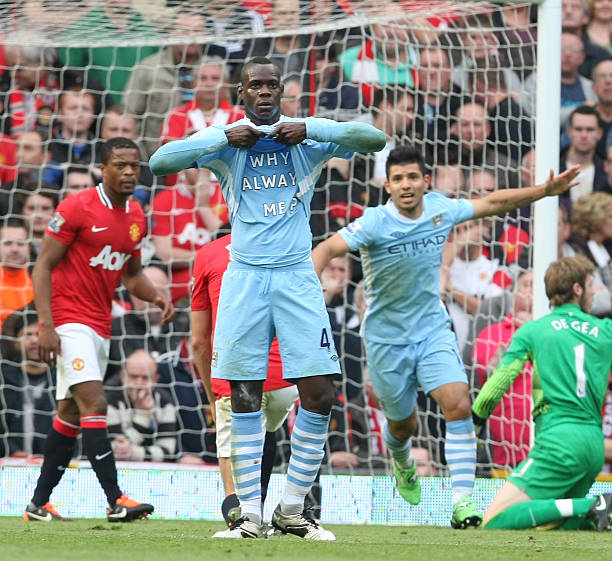
A derby that was supposed to confirm United’s revenge
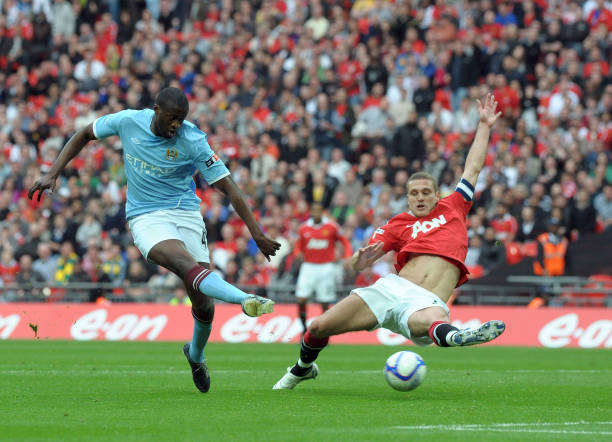
The Manchester derby has a history that stretches far beyond the modern rivalry between the two clubs. Their first league meeting dates back to 1894, when Newton Heath, the club that would become Manchester United, beat Manchester City 5-2. For much of the 20th century, the two clubs experienced different fortunes, but United eventually reached a significantly higher level, particularly under Sir Alex Ferguson.
In 2011, however, the balance of power was beginning to shift. Since Manchester City was taken over by the Abu Dhabi United Group in 2008, the Citizens had access to considerable financial resources and were gradually building a team capable of competing with United. The recruitment of players such as David Silva, Yaya Touré, Sergio Agüero and Mario Balotelli accompanied this rise.
A few months before the famous 6-1, City had already sent a warning. In April 2011, Roberto Mancini’s side beat United 1-0 in the FA Cup semifinal thanks to Yaya Touré. The victory was seen at the time as a possible “changing of the guard”: City went on to win its first major trophy under its new owners a few weeks later, while United remained Manchester’s dominant club.
The context surrounding the October derby was therefore particularly tense. City arrived at Old Trafford top of the league and enjoying an impressive start to the season, having scored 33 goals in its first nine games. United, meanwhile, had gone unbeaten at home in the league for 38 consecutive matches. Everything seemed set for a great derby. But the events that followed would go far beyond anything supporters from either side could have imagined.
From the opening minutes, City displayed impressive control. In the 22nd minute, David Silva found James Milner, whose cutback allowed Mario Balotelli to open the scoring. The Italian, already at the center of numerous headlines just hours earlier following an incident involving fireworks at his home, celebrated his goal by revealing a shirt bearing the words “Why Always Me?” The phrase immediately became one of the most iconic images in the history of the derby.
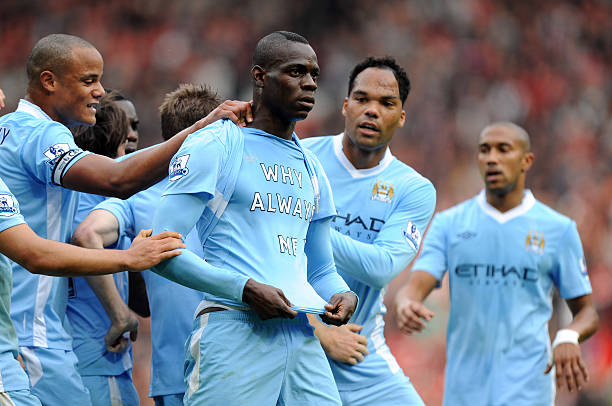
United tried to respond but struggled to truly trouble their opponents. Wayne Rooney and his teammates looked dangerous in spells without being able to find a breakthrough. And just as the Red Devils desperately needed to get back into the game, their situation became catastrophic.
The red card that changed history
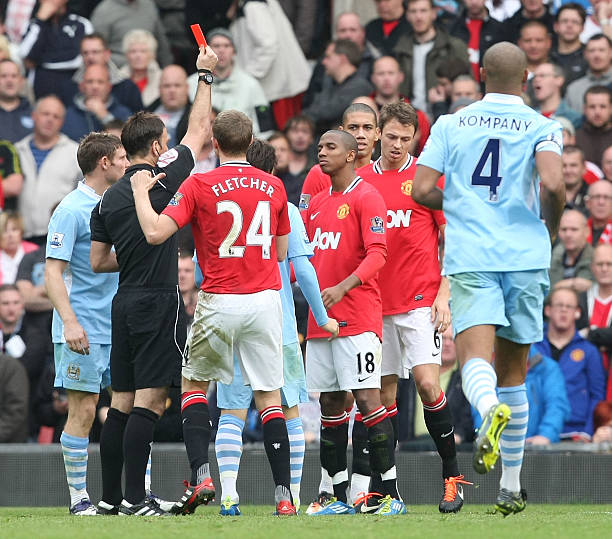
After halftime, Jonny Evans was sent off for pulling back Balotelli as the Italian striker was racing toward goal. Down to 10 men, United found themselves in an almost hopeless situation. Yet Ferguson’s players refused to give up and continued to attack.
That determination to come back into the game would ultimately turn against them. In the 60th minute, Balotelli scored his second goal after another combination between Silva and Milner. City now led 2-0 and began to take complete control of the match. A few minutes later, Sergio Agüero took advantage of a pass from Micah Richards to score the third.
Darren Fletcher did manage to pull one back to make it 3-1 with a perfectly placed shot, briefly giving the impression that another United miracle might be possible. After all, the club’s history under Ferguson was filled with spectacular comebacks. But on that day, even Manchester United’s legendary resilience was not enough.
Instead of closing the game down, the Red Devils continued to attack. Ferguson would later acknowledge that his team had completely lost its sense of proportion: the fullbacks were pushing extremely high, at times leaving City with numerical superiority behind them. The Scottish manager felt his team should have accepted a 3-1 or 4-1 defeat rather than continuing to expose themselves.
City could not have asked for anything better.
In the final minutes, the match turned into a demolition. Edin Džeko scored the fourth, David Silva added a fifth, before Džeko put the final nail in United’s coffin with a sixth goal in stoppage time. The scoreboard at Old Trafford then displayed an almost surreal score:
MANCHESTER UNITED 1-6 MANCHESTER CITY
A defeat that went far beyond the derby
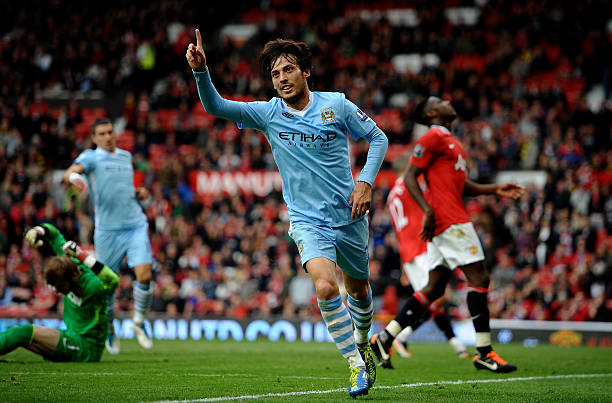
The 6-1 was not simply three more points for Manchester City. It represented a symbolic turning point in the recent history of the rivalry. A few months earlier, the FA Cup semifinal victory had created the first crack in United’s dominance. At Old Trafford, that crack became a complete rupture.
Ferguson had once described City as the “noisy neighbors,” the loud neighbors looking for attention without yet being able to genuinely compete with United. After the 6-1, the expression took on an entirely different meaning. Micah Richards could now throw the phrase back at his neighbor: “Well, here we are.” City was no longer simply the ambitious club trying to disrupt United. It had just humiliated them on their own field.
The significance of the scoreline was even greater because the Citizens moved five points clear of United in the standings that day and gained a spectacular advantage in goal difference. The 10-goal difference between the two teams after the match would even prove hugely important a few months later. In May 2012, City ultimately won the league on goal difference, finishing just eight goals ahead of United.
In retrospect, the 6-1 therefore appears to have been far more than a one-off humiliation. It was one of the defining moments of the new balance of power between the two clubs. City had already begun establishing itself among the title contenders, but this victory gave it a different kind of recognition: that of a rival capable of beating United, dominating them and, above all, doing so at Old Trafford.
For United supporters, the following day was particularly painful. Ferguson knew that his team had suffered a historic humiliation and that the defeat would leave its mark on the locker room. But the manager refused to view the result as the end of his team. For City, on the other hand, that day became further proof that the project had now reached maturity.
Perhaps the cruelest part for United was that the story did not end with the 6-1. A few months later, the two teams found themselves locked in a fierce battle for the title. And on the final day of the season, Sergio Agüero scored against Queens Park Rangers to give City its first English league title since 1968. The 6-1 was therefore not simply a historic derby victory: it was one of the opening acts of a changing balance of power in Manchester.
The Manchester derby had always been a historic rivalry. But on October 23, 2011, it entered a new dimension. For 90 minutes, Old Trafford was no longer the stage for United’s dominance: it became the stage on which Manchester City announced that it was now capable of taking its place among the elite. And when the final whistle blew, the 6-1 scoreline did not simply tell the story of a victory. It told the story of the beginning of a new era.