

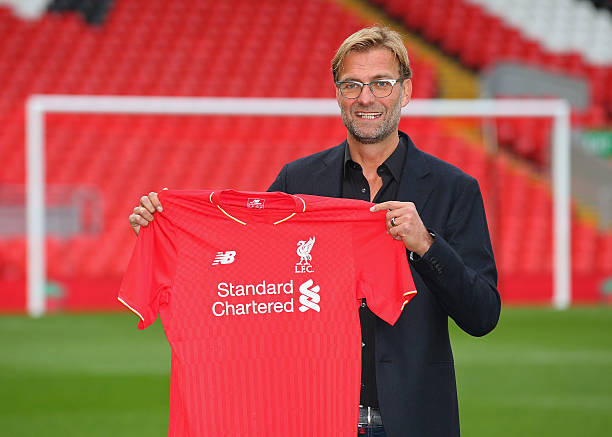
Gegenpressing is the tactic that made Jurgen Klopp famous: the instant his team loses the ball, every player within reach swarms the carrier to win it back inside five seconds. Klopp used it to win two Bundesliga titles at Borussia Dortmund and six different major trophies across 491 games at Liverpool, including the 2019 Champions League and a first English league title in 30 years. The idea has since spread through every major league on the planet, MLS included.
What gegenpressing actually means
The German word translates roughly as counter pressing, and the timing is the whole point. Most pressing systems squeeze an opponent who already has settled possession. Gegenpressing attacks the five or six seconds right after a turnover, when the team that just won the ball is at its most vulnerable.
Klopp’s logic is simple. A side that has just regained possession has players facing the wrong way, no shape, and a first touch to take before it can do anything useful. Winning the ball back in that window means attacking a defense that has not reset.
He has argued for years that counter pressing creates better chances than any single creative midfielder can. Liverpool’s numbers backed him up, with a large share of their goals starting within seconds of a recovery inside the opponent’s half.
- Seconds to win the ball back: 5
Where the idea came from
Klopp did not invent gegenpressing. He learned it. At Mainz in the late 1990s he played under Wolfgang Frank, a coach who drilled zonal marking and a compact block using video of Arrigo Sacchi’s Milan. Klopp has called Frank his mentor and the reason he began thinking like a coach while still a player.
Ralf Rangnick pushed the same principles through German soccer at Ulm, Hoffenheim and later the Red Bull network, turning ball recovery into a club philosophy rather than one man’s preference. By the time Klopp took the Mainz job in 2001, the framework already existed. What he added was intensity, personality, and squads willing to run themselves into the ground for him.
Dortmund and the proof of concept
Borussia Dortmund is where gegenpressing became a spectacle. Klopp arrived in 2008 at a club carrying debt and no obvious route past Bayern Munich, then built a young, ferocious team around Mats Hummels, Nuri Sahin, Shinji Kagawa, Robert Lewandowski and Marco Reus.
Dortmund won the Bundesliga in 2010/11, retained it in 2011/12 with a domestic double, and reached the 2013 Champions League final at Wembley. Klopp described his style as heavy metal soccer, set against the orchestral possession game other coaches preferred, and the label followed him everywhere after that.
The message to the rest of Europe was clear. A club with a fraction of Bayern’s budget could beat them by making the game faster and messier than money could control.
Liverpool and the peak
Klopp took the Liverpool job in October 2015 and spent four years refining the system rather than simply repeating it. Full backs Trent Alexander Arnold and Andy Robertson became the main creators. Roberto Firmino pressed from the front so Mohamed Salah and Sadio Mane could hunt in the channels. Virgil van Dijk and Alisson gave the high line the safety net it had never had.
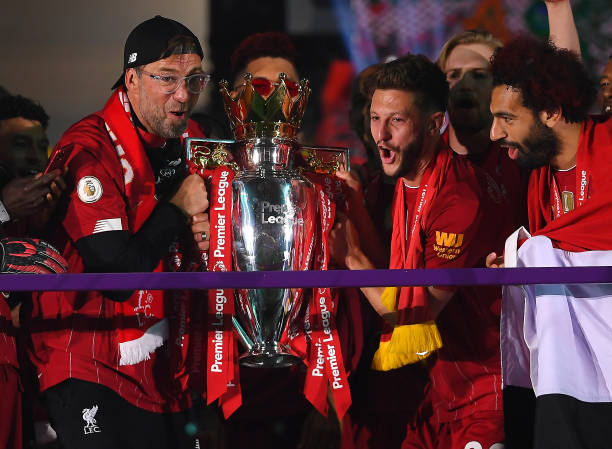
The trophies arrived in a rush. Liverpool won the Champions League in 2019, added the UEFA Super Cup and the Club World Cup the same year, then took the Premier League in 2019/20 with a club record points total and seven games to spare. The season before that, they finished on 97 points without winning the league, the highest total ever recorded by a runner up in England.
- Premier League points in 2019/20: 99
How the rest of the world copied it
Gegenpressing is now part of the standard coaching vocabulary. Premier League sides press far higher than they did a decade ago, La Liga and Serie A teams build recovery triggers into their training weeks, and analysts track PPDA, meaning passes allowed per defensive action, as a routine metric.
American fans have watched the idea land at home. The New York Red Bulls have built around aggressive pressing for more than a decade, and Jesse Marsch carried that education from Harrison to Salzburg, Leipzig and Leeds before leading Canada to the round of 16 at the 2026 World Cup on home soil.
MLS suits the system well. Young rosters, punishing travel, and a league that rewards transition play all favor teams that defend by attacking.
Where gegenpressing stands in 2026
Klopp left Liverpool in May 2024, spent 18 months as Red Bull’s head of global soccer, and returned to the sideline in August 2026 as head coach of Germany, hired after their round of 32 exit at the World Cup. He named counter pressing as one of the pillars of the rebuild in his opening press conference.
- Liverpool games under Klopp: 491
His debut ended 1-1 against the Netherlands in Amsterdam in the Nations League, a bruising night that looked exactly like a Klopp team still learning itself. His contract runs through the 2030 World Cup, which gives the most famous pressing coach in the sport four years to prove the idea still works at international level.
FAQ
What is gegenpressing in soccer? It is a counter pressing system where a team tries to win the ball back immediately after losing it, usually within about five seconds, while the opponent is still disorganized and facing the wrong way.
Did Jurgen Klopp invent gegenpressing? No. He learned the principles from Wolfgang Frank at Mainz and developed them alongside ideas spread through German soccer by Ralf Rangnick. Klopp made the style famous and proved it could win major trophies.
Why does gegenpressing demand such fit players? The system asks for repeated sprints in short bursts across 90 minutes. Klopp managed the load with heavy rotation, recruitment aimed at young runners, and preseason work built around recovery speed rather than distance.
Where can I watch Klopp’s Germany and the Premier League in the US? Premier League matches stream on Peacock and the NBC platforms. UEFA club soccer runs largely through Paramount+, while Nations League and European qualifying coverage is available on Fubo and other US carriers.