

When the world turns its attention to North America in June 2026, it will be looking at three host nations. The United States will bring its economic power. Canada will offer its international openness. But to truly understand the soul of this World Cup, people will have to look south—to Mexico.
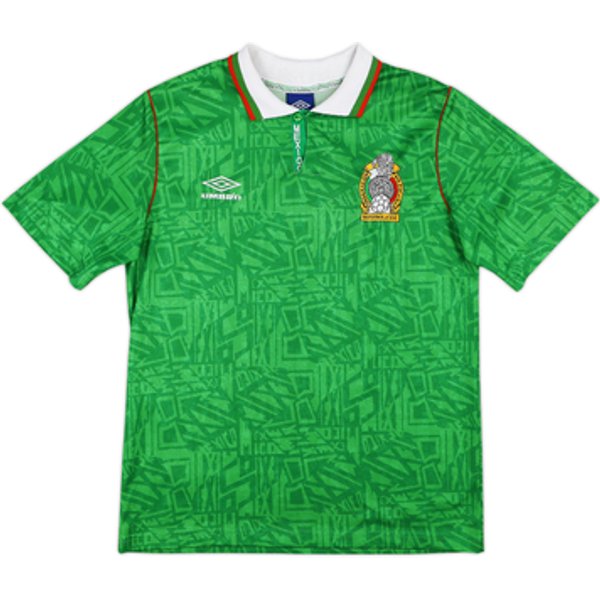
No other host country has such an intimate relationship with soccer. No other nation can claim to be hosting the World Cup for a third time. And few countries have turned the sport into such a central part of their national identity. For Mexicans, soccer is not simply a game. It is a common language, a collective memory, and a tradition passed down from generation to generation.
Just days before the start of the 2026 World Cup, the country is preparing to reconnect with a history that belongs almost as much to Mexico as it does to FIFA itself.
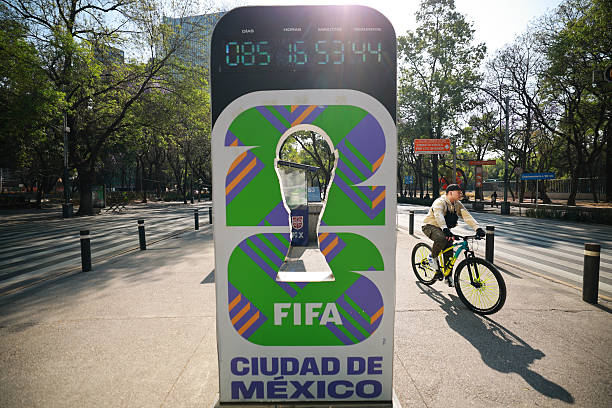
A unique place in the World Cup history
Mexico occupies a unique place in the history of global soccer.
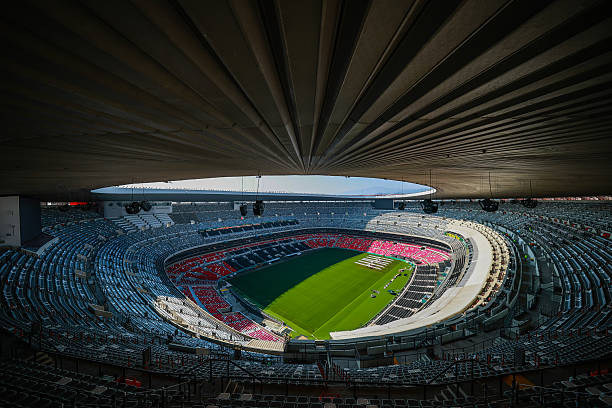
In 1970, it became the first Latin American country outside Brazil to host the World Cup. That tournament entered soccer folklore thanks to Pelé’s magnificent Brazil, featuring Jairzinho, Tostão, and Rivelino, a team often regarded as one of the greatest ever assembled. It was also during that tournament that the world truly discovered the legendary Estadio Azteca, the enormous concrete cathedral overlooking Mexico City.
Sixteen years later, fate knocked on Mexico’s door once again. After Colombia withdrew from hosting the 1986 World Cup, Mexico stepped in despite still recovering from the devastating 1985 earthquake. That tournament would produce some of the most iconic images in soccer history: the “Hand of God,” Diego Maradona’s mesmerizing run against England, and Argentina’s eventual triumph.
Forty years later, the country is preparing to write a third chapter.
No nation has ever hosted three World Cups.
This distinction is not a coincidence. It reflects the special place Mexico occupies in the global soccer imagination.
Some stadiums transcend their original purpose. Estadio Azteca belongs to that category. For soccer fans, its name instantly evokes timeless images: Pelé lifting his third World Cup in 1970, Maradona defying logic in 1986, and tens of thousands of supporters transforming every match into a massive public celebration.
As the 2026 World Cup approaches, Azteca is preparing once again to become the center of the soccer world.
Few venues carry such symbolic weight. Wembley represents England. The Maracanã symbolizes Brazil. Azteca belongs to the universal heritage of soccer.
Perhaps that is what separates Mexico from the other host nations. The World Cup is not simply being welcomed there.
It is returning home.
To understand Mexican passion for the game, one must leave the stadiums and walk through the streets.
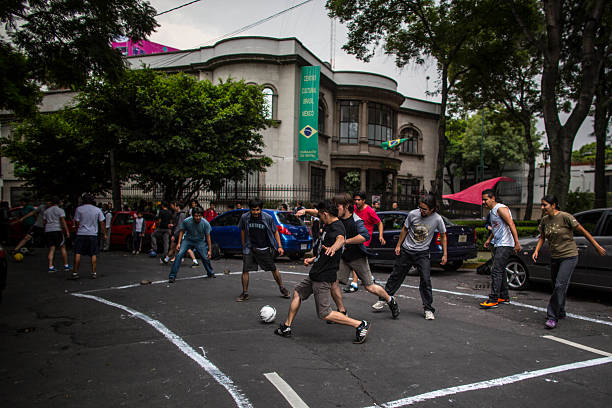
In Mexico City, Guadalajara, and Monterrey, soccer is everywhere. European club jerseys share space with local team colors. Public squares become improvised soccer fields. Cafés, markets, and restaurants live according to the rhythm of matches.
This popular passion is one of the reasons FIFA continues to return to Mexico.
Soccer is experienced there with a unique intensity. Every goal becomes a collective celebration, every match an opportunity to come together. The sport is not viewed as mere entertainment but as a fundamental component of national identity.
This culture has also produced some of the most recognizable traditions in world soccer.
The famous “Mexican Wave,” popularized during the 1986 World Cup, continues to be recreated in stadiums around the globe today.
Where culture and soccer become one
One of the most fascinating aspects of Mexico’s role in the 2026 World Cup is its cultural dimension.
In Mexico City, authorities have chosen not to limit the event to the stadiums. The entire city has become an open-air exhibition celebrating the arrival of the tournament.
Museums throughout the capital are hosting exhibitions dedicated to soccer history and its influence on contemporary society. City officials have even created a vast “World Cup Cultural Corridor” designed to connect artistic events and public celebrations linked to the tournament.
The famous Paseo de la Reforma now features enormous five-meter-tall sculptures of soccer players. Elsewhere, giant Panini cards pay tribute to heroes of past World Cups. Pelé, Maradona, Zidane, and Messi appear alongside historic tournament posters from previous editions.
The message is clear.
Mexico does not simply want to organize a sporting event.
It wants to tell a story.
This fusion of sports and culture is nothing new. Mexico has a long tradition of muralism and public art. For the World Cup, that tradition has found new life.
Across the country, thousands of murals have been created to accompany the tournament. The project primarily involves young people and seeks to use soccer as a tool for reclaiming public spaces. Abandoned walls, schools, and neighborhood fields have been transformed into works of art celebrating sport, cultural diversity, and national unity.
This approach perfectly illustrates Mexico’s special relationship with soccer.
Here, the ball is not merely a spectacle.
It becomes a catalyst for artistic creation and collective life.
The 2026 World Cup will be the largest in history, featuring 48 teams and a record number of matches. Mexico will host only part of the tournament, but its cultural influence extends far beyond the number of games played on its soil.
For millions of visitors, the country will represent the emotional gateway to the competition. Mariachi music, colorful markets, world-renowned cuisine, lively public squares, and Mexican hospitality will all enrich the global experience.
Soccer becomes a bridge between cultures.
Supporters from Japan, Eastern Europe, Africa, and South America will share the same spaces and the same emotions around a single ball.
More than a tournament
The World Cup’s arrival has not been entirely free of controversy.
As the tournament approaches, several social movements have used the media attention surrounding the event to highlight national issues and demands. Demonstrations have taken place in Mexico City, while a number of urban development projects linked to the World Cup have sparked debate among local communities.
These tensions serve as a reminder of a universal reality: major sporting events are always about more than sports.
They become national showcases.
Moments when a country’s achievements—but also its challenges—are placed under the global spotlight.
Mexico is no exception.
When the opening whistle sounds in Mexico City, it will not simply mark the beginning of another World Cup.
It will open a dialogue between generations.
The generation that watched Pelé in 1970.
The generation that admired Maradona in 1986.
And the generation that will experience its first World Cup in 2026.
Few countries can offer such historical continuity.
Few nations have been present for so many defining moments in the evolution of modern soccer.
Through Azteca, its decorated streets, its museums, its supporters, and its vibrant popular culture, Mexico reminds the world of a truth that is sometimes forgotten in an increasingly commercialized sport:
Soccer remains, above all else, a matter of emotion.
That is why FIFA keeps returning.
Because in Mexico, soccer is not merely played.
It is lived.
And as the country prepares to welcome the world for a third time, it is once again ready to prove that it remains one of the game’s great sacred lands.