

Ivory Coast heads into the 2026 FIFA World Cup with a new status.
For years, the Elephants embodied the unfulfilled potential of African football. Despite boasting exceptional generations led by Didier Drogba, Yaya Touré, and Gervinho, they never managed to advance beyond the group stage of a World Cup, falling victim to brutally difficult groups in 2006, 2010, and 2014.
But since their historic triumph on home soil at the 2024 Africa Cup of Nations, something has changed.
This team has regained confidence, ambition, and credibility. Under the leadership of Emerse Faé, the Ivorians arrive in North America with a clear objective: finally overcome the hurdle that has eluded them for two decades and reach the knockout stage of a World Cup.
Many observers consider Ivory Coast one of Africa’s most talented teams in the tournament. More experienced than Morocco was at the beginning of its historic 2022 run and powered by a generation that has reached maturity, the Elephants believe they have what it takes to challenge the established global hierarchy.
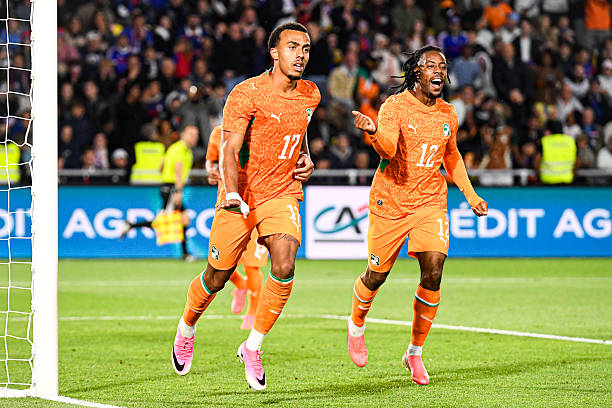
The group
Ivory Coast will compete in Group E alongside:
- Germany
- Ecuador
- Curaçao
The draw has provided the Elephants with an opportunity that previous generations rarely enjoyed.
Germany remains one of world football’s giants and enters as the clear favorite to win the group. However, behind Die Mannschaft, the battle for qualification appears wide open between Ivory Coast and Ecuador. Meanwhile, Curaçao, appearing in its first-ever World Cup, could prove dangerous thanks to its enthusiasm and lack of pressure.
For the Ivorians, the equation is straightforward: avoid defeat against Ecuador, secure three points against Curaçao, and approach the showdown with Germany with the ambition of causing an upset.
According to several African analysts, this group may represent Ivory Coast’s best chance yet to finally advance beyond the first round of a World Cup. Unlike the brutal groups they faced in 2006, 2010, and 2014, the Elephants have every reason to believe they can qualify.
Key players
Yan Diomande
The face of the future.
While Ivory Coast still possesses several experienced leaders, the 2026 World Cup could become Yan Diomande’s breakout tournament.
One of the revelations of the past year, the young winger perfectly symbolizes the new generation emerging behind the heroes of the 2024 AFCON triumph.
Fast, fearless in one-on-one situations, and blessed with excellent technical ability, he brings unpredictability to the Elephants’ attack. Many observers view him as one of the brightest prospects in Ivorian football. In a tournament where breakout stars often emerge, Diomande has all the tools to introduce himself to the global audience. His performances have reportedly attracted the attention of European giants Paris Saint-Germain and Liverpool.
Franck Kessié
The midfield leader.
Captain during the 2024 continental triumph, Kessié remains the true leader of this squad.
His influence extends far beyond what he provides on the pitch. Experienced, respected in the locker room, and accustomed to major international tournaments, he represents the stability of this team. Even after his move to Saudi Arabia in 2023, he continues to be one of the pillars of the national side.
On the field, his physical presence, ball-winning ability, and willingness to drive forward remain essential. As many analysts have pointed out ahead of the tournament, Ivory Coast will need a vintage Kessié if they hope to compete with teams as strong as Germany and Ecuador.
Evan Ndicka
The defensive cornerstone.
Strong, quick, and exceptionally comfortable in possession, Ndicka has established himself as the defensive reference point of the Elephants.
At just 26 years old, he already possesses extensive experience at the highest level of European football.
In a competition where defensive details often determine success or failure, his ability to neutralize opposing forwards will be crucial. Against Germany in particular, his battles with the German attack could play a major role in shaping Ivory Coast’s fate.
Emmanuel Agbadou
The control tower.
For years somewhat overlooked compared to more high-profile teammates, Agbadou has steadily become one of the most important figures in the national team.
Powerful in duels, dominant in the air, and dangerous on set pieces, he complements Evan Ndicka perfectly in central defense.
Observers have highlighted his growing importance to the team’s defensive balance. The experience he has gained in European football could prove invaluable in the high-intensity matches awaiting the Elephants.
The face of Ivory Coast in 2026
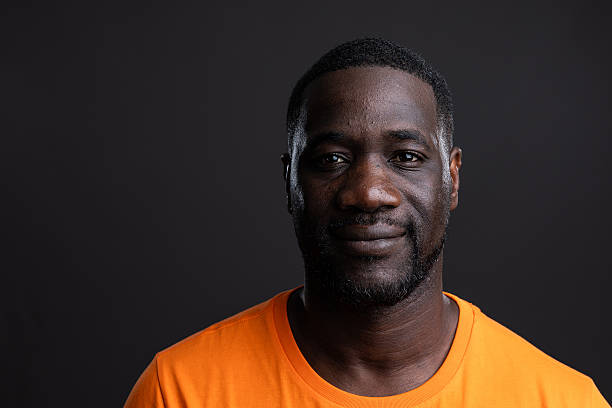
Few African teams enter this World Cup with greater ambition.
Since their historic AFCON triumph in Abidjan in 2024, Ivory Coast has reached a new level. That title, earned through one of the most improbable journeys in African football history, dramatically strengthened the confidence of the squad. The Elephants are no longer simply a talented team—they are the reigning African champions.
Under Emerse Faé, the team has developed a clear identity. Physical intensity, rapid transitions, aggression in duels, and collective solidarity have become the trademarks of this side. Many observers now regard the Ivorians as one of Africa’s strongest contenders alongside Morocco and Senegal.
Their World Cup qualifying campaign reinforced that perception. Ivory Coast displayed greater consistency and control than in previous cycles while gradually integrating a new generation alongside the experienced core that conquered Africa.
One of the team’s greatest strengths lies precisely in this balance between youth and experience. Players such as Kessié, Ndicka, and Agbadou provide leadership and high-level experience, while talents like Yan Diomande represent the future of Ivorian football.
Group E presents a genuine opportunity. Germany enters as the favorite, but second place appears very attainable. Ecuador is a solid but manageable opponent, while Curaçao is entering uncharted territory at this level.
Reaching the Round of 32 is now an openly stated objective. Some analysts have even suggested that Ivory Coast could go beyond that stage if the knockout bracket breaks in its favor. Others point out that this generation may possess greater depth than the talented squads that fell short in 2006, 2010, and 2014.
For years, Ivory Coast represented the perfect example of unrealized African potential. Despite boasting stars such as Drogba, Touré, and Kalou, the nation never managed to advance from the group stage of a World Cup.
This time, the circumstances are different.
The Elephants arrive with a recent continental title, a head coach who enjoys the complete trust of his players, and a generation that appears to have reached its peak.
Having reconquered Africa, they now want to prove they belong on the global stage.
And for the first time in a long time, that goal feels genuinely within reach.
 Ivory CoastIvory Coast