

When the final whistle blew in Houston on Friday night, the Cape Verde players did not celebrate right away. They pulled out their phones, gathered in a loose circle on the NRG Stadium turf, and waited. A few hundred miles away in Guadalajara, Spain were closing out a 1-0 win over Uruguay, and that result was the last piece Cape Verde needed to be certain. When it landed, the dam finally broke. Grown men dropped to the grass in tears. A nation of roughly half a million people, scattered across ten volcanic islands off the coast of West Africa, had just reached the round of 32 of the World Cup on its very first appearance.
This is the kind of story soccer loves to tell about itself, and for once it is completely true.
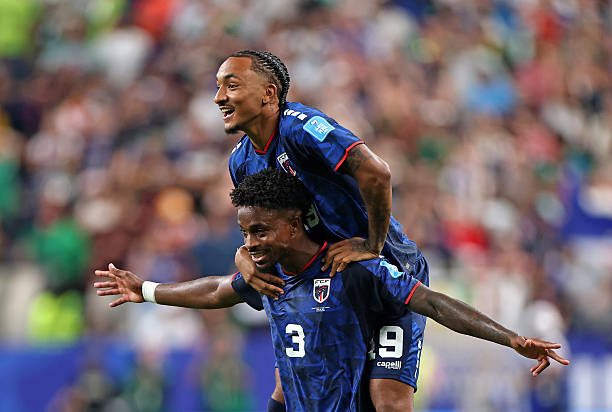
The smallest of them all
Let us be clear about what actually happened here, because it is easy to file this under “nice underdog tale” and move on. Cape Verde is now the smallest country by population to ever reach the knockout stage of a men’s World Cup. The only nations smaller that even qualified for the tournament, Iceland back in 2018 and Curaçao earlier this same summer, both went home after the group stage. Cape Verde went further than either of them, and it did so without losing a single match.
- 525,000: Cape Verde’s approximate population, the smallest of any nation to ever reach a men’s World Cup knockout round.
For a country that only became a regular face at the Africa Cup of Nations in the last decade, this is a generational leap. The islands are not a soccer superpower. They do not have a billion dollar league or a famous academy system. What they have is a plan, a goalkeeper having the time of his life, and a belief that nobody at the top of the sport bothered to take seriously.
A group nobody gave them a chance in
The draw looked brutal on the day it came out. Cape Verde landed in Group H alongside Spain, the reigning European champions, Uruguay, winners of the very first World Cup in 1930, and a Saudi Arabia side with genuine tournament pedigree. The Blue Sharks arrived ranked 67th in the world and were treated by most observers as little more than tournament extras, there to make up the numbers.
Then they opened with a 0-0 draw against Spain, the first goalless result of the entire competition and a shock that almost nobody saw coming. Next came Uruguay, and a 2-2 draw that finally produced the first World Cup goals in Cape Verdean history. Kevin Pina struck in the 21st minute, Hélio Varela added the second after the break, and a team that was supposed to fold simply refused to. The finale against Saudi Arabia ended 0-0, with chances at both ends, and that single hard earned point was enough to send the islanders through in second place.
- 3 draws, 0 losses: Cape Verde became the first debutants to go unbeaten across three group games since Senegal in 2002, and the first newcomers to reach the knockout stage since Slovakia in 2010.
Vozinha, the wall in goal
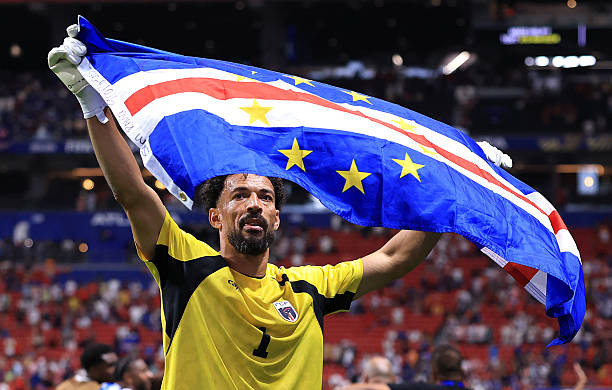
Every great run needs a hero, and Cape Verde found theirs in Vozinha, a goalkeeper who is 40 years old and who spent last season in the Portuguese second division with Chaves. He produced a seven save masterpiece against Spain, then added two more clean sheets to close out the group. By the end of the week he had gone from anonymous to global, his Instagram following exploding past sixteen million as the world fell for his calm, defiant brilliance.
There was a tender detail to the night too. His mother, who had missed the Spain game because of visa problems, watched the Saudi Arabia match from a suite in Houston, waving a tiny Cape Verde flag while a row of shirtless fans painted the letters of his name across their chests.
- 3 clean sheets: Vozinha is only the third goalkeeper to record multiple World Cup clean sheets after turning 40, joining Peter Shilton and Dino Zoff.
A team built across an ocean
Cape Verde did not stumble into this moment. The federation spent years building a squad that reaches far beyond the islands themselves, leaning heavily on a huge diaspora spread across Europe. Fourteen of the 26 players at the World Cup were born abroad, six of them in the Dutch city of Rotterdam alone. The defender Roberto Lopes, born in Dublin, was famously recruited after the federation slid into his messages on LinkedIn. Even former Manchester United winger Bebe wore the Cape Verde shirt at the 2023 Africa Cup of Nations.
This is a national team assembled with patience, smart scouting, and a willingness to look absolutely everywhere. It is also, quietly, a blueprint that other small soccer nations are going to study very closely for years to come.
Bubista and seven attempts at a dream
The man who tied it all together is Bubista, a 56 year old former Cape Verde defender who became the first coach in history to take his country to a World Cup. The Blue Sharks had been trying since 2002, falling short six times before finally breaking through on the seventh. They sealed their place in October 2025 with a 3-0 win over Eswatini, finishing four points clear of Cameroon at the top of their qualifying group with seven wins from ten matches. Only Cameroon managed to beat them along the entire road.
Asked afterward whether he could have imagined any of this, Bubista barely blinked. He had always said, he told reporters while draped in his country’s flag, that sooner or later Cape Verde would arrive on exactly this stage.
Argentina, Messi, and a dream that keeps going
The reward is almost absurd. Cape Verde now travel to Miami on July 3 to face Argentina, the reigning world champions, with Lionel Messi waiting on the other side. On paper it is the ultimate mismatch, a nation of half a million against the best player of his generation and a squad of superstars.
Then again, paper said the same thing about Spain and Uruguay. One fan in Houston held up a sign that captured the whole story in four words: “Small Islands, Big Dreams.” For 90 minutes against Argentina, anything will feel possible again, and Cape Verde has already proven the only point that really matters. The size of a country has nothing to do with the size of what it can achieve.
 Cape Verde IslandsCape Verde Islands