

After two seasons without Champions League soccer, Manchester United is finally returning to Europe’s most prestigious competition. The comeback symbolizes both the club’s resurgence and the scale of the work that still needs to be done. Under Michael Carrick, the Red Devils have regained stability and a clearer identity, but going from a team capable of finishing a season strongly to one capable of competing every three days is a far more complex challenge. The summer transfer window, relatively quiet so far, also raises a central question: should United already be looking to compete at the very top, or should it first consolidate the foundations of its new project?
Not rushing the process
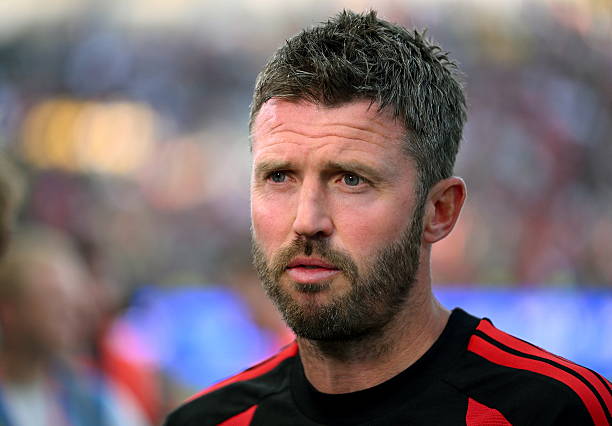
Manchester United’s first objective should be to avoid viewing its return to the Champions League as the culmination of its recovery, but rather as the beginning of a new stage. Michael Carrick’s arrival changed the face of the club. In 17 games last season, the former midfielder recorded 12 wins and three draws, notably helping United return to the Champions League.
That run was enough to convince the club’s leadership to hand him the job on a permanent basis. But that success now needs to be confirmed over an entire season.
The difficulty will be reproducing that efficiency with a much heavier schedule. The Champions League will add several high-level European games to a season already packed with the Premier League, FA Cup and League Cup. Carrick will therefore have to learn how to manage difficult periods, rotate his squad and, above all, prevent his team from losing intensity when its usual starters are unavailable.
That is a fundamental difference from the second half of last season: United will no longer be able to focus exclusively on the league.
The return to Europe should therefore be approached with ambition, but also with pragmatism. The real progress would not necessarily be making a deep Champions League run immediately this season. Being able to qualify for the competition again in 2027 would already represent an important step. Especially because expectations surrounding the club will immediately increase. Manchester United remains Manchester United: a team returning to the Champions League will automatically be compared with Europe’s best clubs, even if its project is still under construction. The danger would then be trying to artificially accelerate the rebuilding process.
A transfer window important to match with Carrick’s ambition
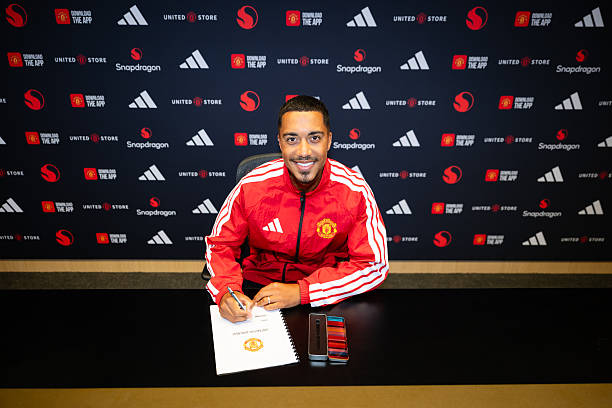
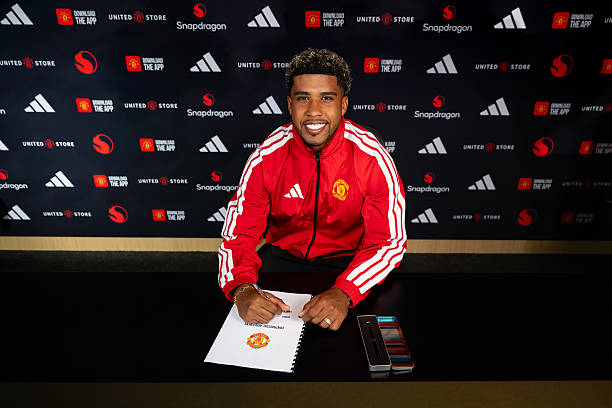
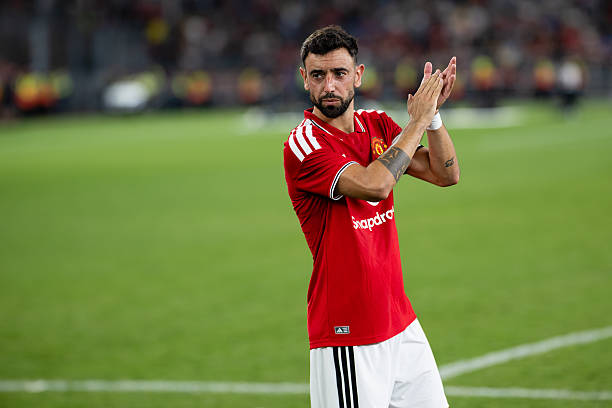
This is probably the main question surrounding Manchester United. The club has made several moves this summer, but its transfer window remains relatively quiet compared with some of its direct competitors. Yet returning to the Champions League automatically requires a deeper and higher-quality squad. Carrick needs players capable of maintaining the team’s level of performance when key players need a rest. The issue is therefore not simply finding eleven starters: United needs to build a squad of 18 to 20 players capable of performing at the highest level.
The arrivals of Andrey Santos and Youri Tielemans, in particular, provide more options in midfield, but significant work remains to be done.
The midfield illustrates this need particularly well. Casemiro’s departure and Manuel Ugarte’s fitness problems had already weakened the area, while United had missed out on several targets before turning to other solutions.
Carrick therefore needs to avoid repeating one of the club’s recurring mistakes in recent years: recruiting based on urgency rather than according to a genuine sporting structure. Recruitment must follow a precise logic. Every new arrival should allow Carrick to maintain his identity when the schedule becomes more demanding.
Central defense is another area to monitor. United has several options, but last season showed how quickly this area could become fragile when injuries pile up. Carrick wants to build a team capable of defending higher up the pitch and controlling games more effectively. To do that, he needs defenders who can manage the space behind them and play out cleanly under pressure.
The transfer window therefore does not necessarily need to be spectacular. But it needs to be surgical.
Build a team able to lasting
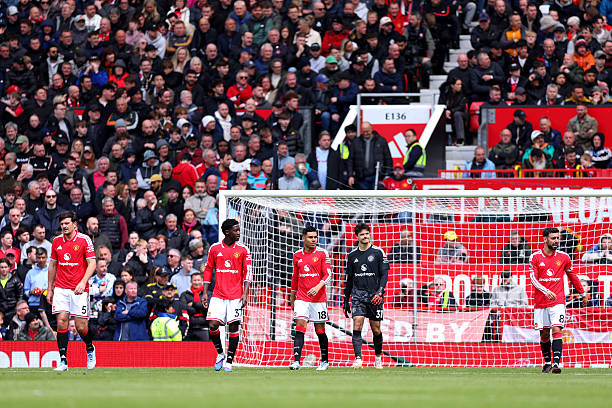
Manchester United’s real challenge will ultimately be mental and tactical.
The Red Devils have shown under Carrick that they can become extremely competitive again. But the next step is turning that momentum into a lasting identity.
The Premier League will probably be more difficult than ever. Arsenal, Manchester City, Liverpool, Chelsea and other contenders also have ambitious projects. United’s return to the top end of the table therefore does not automatically mean a return to the title race. Current projections place the club more in the battle for European places than among the league’s major favorites.
Carrick’s main task is to make his team predictable in the best possible way: a team that everyone knows will be competitive every week.
That requires better game management. United will have to learn how to win without necessarily playing brilliantly, manage a lead, accept certain periods of opposition dominance and, above all, avoid the roller-coaster performances that have characterized several of its recent seasons.
This is also why the Champions League return can be extremely beneficial.
Regularly facing Bayern Munich, Real Madrid, Paris Saint-Germain or the other major European teams will force United to raise its standards. The players will once again experience matches where the slightest mistake is immediately punished. Carrick will also be able to measure the distance between his team and the best sides on the continent.
But United must avoid turning every European game into an exceptional event.
The new Manchester United needs to learn how to make the highest level feel normal.
After two seasons without Champions League soccer, simply hearing the European anthem at Old Trafford again will inevitably represent a symbolic milestone. But Carrick’s project cannot stop there.
The objectives for this season should be threefold: confirm a return to the top four, build a squad capable of handling the European schedule and establish a lasting playing identity.
If United can accomplish all three, then this season can truly be considered the beginning of its return among the elite.
For now, Manchester United is not yet a title contender. But under Carrick, the club finally seems to have regained something it had lost for several years: a clear direction.
 Manchester United