

Some players have occasionally seemed to reach another level as soon as they put on their national team jersey. Freer, given greater responsibility or simply better suited to the way their national team operated, they produced some of their most memorable performances on the international stage, while their spells at club level sometimes left a more mixed impression. Guillermo Ochoa, Paul Pogba, Miroslav Klose and James Rodríguez are among the players identified by L’Équipe as having performed better for their national teams than for their various clubs. Olivier Giroud can also be added to that list, as his history with the French national team perfectly illustrates this phenomenon.
Guillermo Ochoa for big occasion
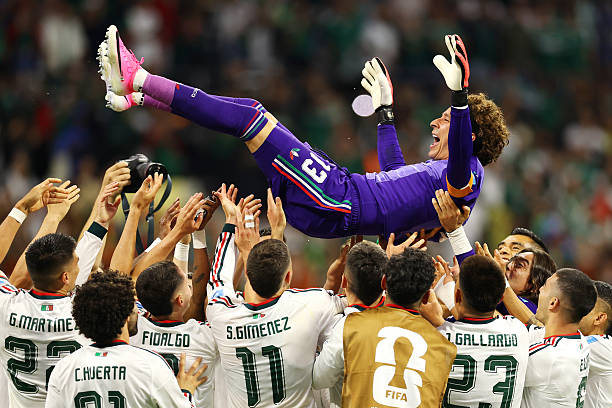
Guillermo Ochoa is probably one of the clearest examples. The Mexican goalkeeper built much of his reputation through his performances with El Tri, particularly at the World Cup. His game against Brazil in 2014 remains one of the defining images of his international career: in a match neither side managed to win, Ochoa made save after save, including a spectacular stop on a Neymar header. His ability to show up on the biggest occasions followed the goalkeeper throughout his international career. Ochoa played in five World Cups and had 147 international appearances at the time of L’Équipe’s article. At club level, however, his European career never reached the same heights. Having played for Ajaccio, Málaga, Granada and Standard Liège, among others, he never managed to establish himself permanently at a major European club. His status therefore became somewhat paradoxical: he became more closely associated with Mexico’s exploits than with a club career at the highest level.
Paul Pogba reached the highest level with France
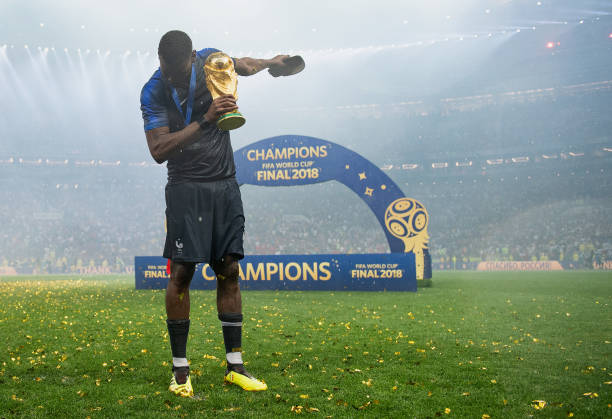
Paul Pogba’s case is different, because his spell at Juventus had already shown the full extent of his potential. But with the French national team, the midfielder regularly appeared to reach another level. Emerging at the 2014 World Cup, Pogba gradually established himself as one of Les Bleus’ leaders before becoming one of the symbols of their 2018 World Cup triumph. In the final against Croatia, he scored France’s third goal and delivered a particularly complete performance in a game that would ultimately crown Didier Deschamps’ generation. His 91 international appearances reflected his importance to Les Bleus at the time of L’Équipe’s publication. By contrast, his return to Manchester United in 2016 never produced the same impression of control and consistency as his best periods with the national team or at Juventus. His case notably illustrates the importance of the collective context: with France, Pogba played in a midfield designed to maximize his ability to make forward runs, use his power and create, with clearly defined responsibilities.
Miroslav Klose, the World Cup sniper
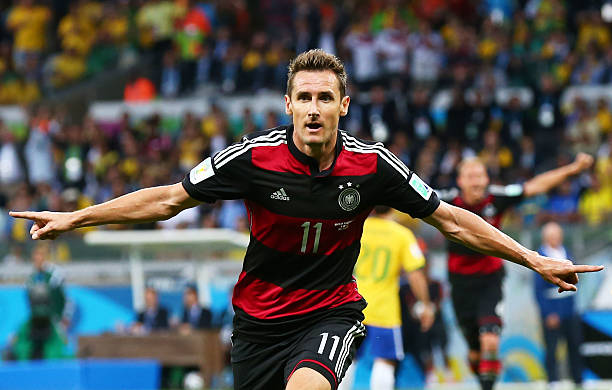
Miroslav Klose was never a bad club player. Quite the opposite, his spells at Werder Bremen, Bayern Munich and Lazio were successful enough to constitute a top-level European career. But his name remains primarily associated with Germany and the World Cup. With 137 international appearances and 71 goals, Klose became the leading scorer in the history of the German national team. Above all, he scored 16 goals in World Cup finals, a record that for a long time symbolized his ability to deliver when the stakes were highest. He is also the only player to have appeared in four World Cup semifinals. His influence with Germany therefore went far beyond that of a simple goalscorer: Klose was part of the national team’s major campaigns for more than a decade and eventually won the 2014 World Cup. While his club performances built a solid career, his displays with the Mannschaft built a legacy.
James Rodriguez : from global breakout to Colombia key’s
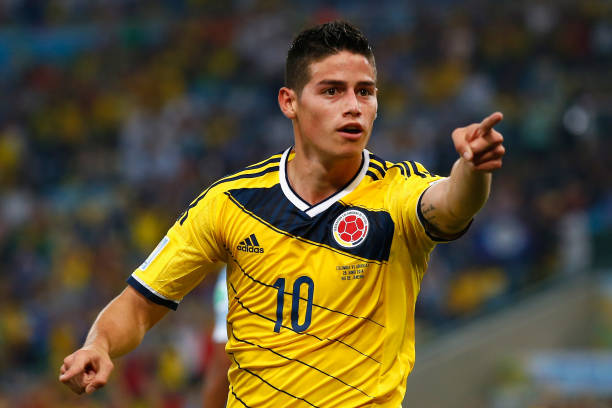
James Rodríguez is perhaps the case that best illustrates the difference between a player’s talent and the context in which he operates. His 2014 World Cup with Colombia propelled him onto the global stage: six goals, the tournament’s Golden Boot and a goal against Uruguay that became iconic. The attacking midfielder had given the impression that he was destined to dominate European soccer for many years. Yet after his move to Real Madrid, his club career went through several more complicated periods, involving competition for playing time, injuries, coaching changes and various loan spells. With Colombia, James retained the status of a technical leader that his club experiences did not always allow him to fully express. At the 2024 Copa América, L’Équipe highlighted his importance to Colombia’s run, with five assists and a goal at the beginning of the competition. His 104 international appearances and 28 goals already demonstrated his historical importance to his national team.
Olivier Giroud when France became his Space to play
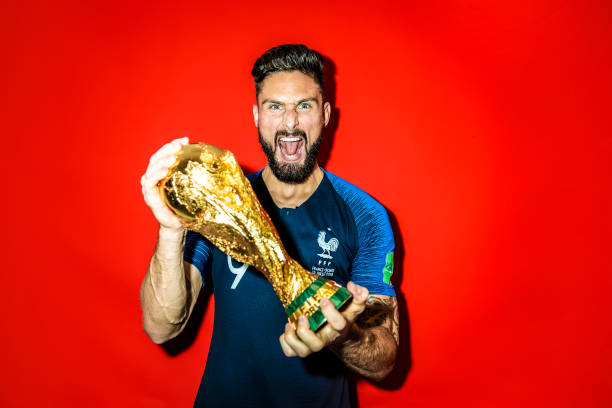
Olivier Giroud represents another type of case. His history with the French national team was not always linear, but it was often marked by a level of efficiency superior to what he displayed during certain periods at club level. In 2017, when his playing time at Arsenal was limited, Didier Deschamps publicly pointed out that his situation was “not ideal” for his future with the national team. Despite this, Giroud had scored six goals in seven games for Les Bleus that year, showing that his international output remained high despite a difficult sporting situation at club level. The manager was even implicitly asking him to consider his situation, believing it would be preferable for him to play at a club where he could get more minutes.
Two years later, the phenomenon was even more striking. At Chelsea, Giroud had become a secondary option and had played just 191 minutes since the beginning of the 2019-20 season before joining up with France. Yet as soon as he returned to the national team, he once again became an essential part of Deschamps’ system. In Iceland, in October 2019, he put together 78 particularly useful minutes and scored the winning penalty despite his lack of rhythm at club level. His role was not limited to scoring, either: his ability to play with his back to goal, compete in duels, provide layoffs, hold up the ball and create space for Antoine Griezmann made him an especially valuable tactical component. Deschamps explained at the time that he knew what Giroud was capable of and that he had not even questioned his decision to start him.
The relationship between Giroud and Les Bleus was long based on this ability to turn frustration experienced at club level into energy with the national team. The Frenchman himself explained that there were two ways for a player to react when he was left out: put his head down and complain, or turn that frustration into positive energy. With France, he regularly chose the second option. His career therefore shows that a player can be viewed differently depending on the context in which he plays. At club level, Giroud was often faced with competition, coaching changes and periods when his profile seemed less suited to his team’s tactical choices. With Les Bleus, Deschamps instead built an environment in which his qualities as a target man, link-up player and finisher could be maximized.
Ochoa, Pogba, Klose, James Rodríguez and Giroud therefore experienced different career paths, but shared one common trait: their international careers sometimes told a stronger story than their club careers. For some, the national team provided the biggest stages of their careers; for others, it simply offered a tactical framework or level of confidence that they did not always find on a daily basis at club level. One thing remains certain: the national-team jersey can sometimes reveal a different version of a player, to the point of becoming the environment in which his talent is expressed most consistently.