

Every World Cup is a stage for the prime athlete, the 26 year old in peak condition. Yet some of the tournament’s most unforgettable goals have come from players who had no business being there at all: teenagers barely out of school, and grizzled veterans who should have been coaching by then. The gap between the youngest and oldest scorers in this competition spans nearly a quarter of a century of life, and the two record holders could not be more different.
At the 2026 World Cup on home soil for the United States, the topic got fresh oxygen. Lionel Messi scored a hat trick against Algeria and, at 38 years and 357 days, became the third oldest goalscorer in World Cup history. That alone tells you how rare it is to find the net this late in a career. So who sits at the very top, and bottom, of the age chart?
The youngest: Pelé, and a record that refuses to fall
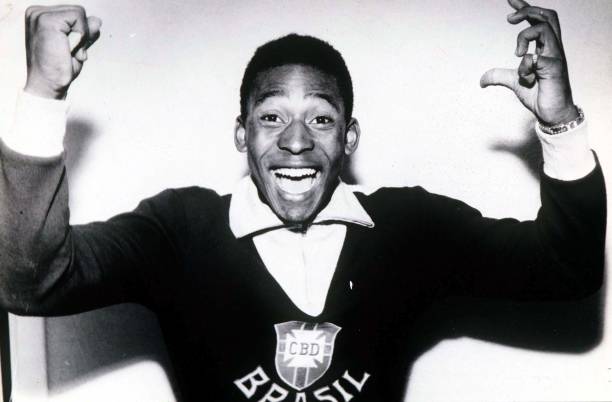
The answer to the youngest is the answer to almost every World Cup question: Pelé. The Brazilian was 17 years and 239 days old when he scored against Wales in the quarterfinal of the 1958 World Cup in Sweden. It was the only goal of the game, a teenager settling a knockout tie on the biggest stage in the sport.
- Age at his first World Cup goal: 17 years, 239 days
He was not done. Days later he scored a hat trick against France in the semifinal, then netted twice in the final against Sweden, making him the youngest player ever to score in a World Cup final. Six goals from a 17 year old at a single tournament. The record has stood for almost seventy years and shows no sign of cracking.
- World Cup goals before his 18th birthday: 6, all in 1958
Behind Pelé, the chasing pack is a who’s who of precocious talent. Mexico’s Manuel Rosas sits second at 18 years and 93 days, scoring back in the very first World Cup in 1930. Then comes a more familiar name. Spain’s Gavi became the third youngest scorer in tournament history when he volleyed home against Costa Rica at Qatar 2022, aged 18 years and 110 days. England’s Michael Owen, whose solo run against Argentina in 1998 announced him to the world, ranks fourth at 18 years and 190 days.
The pattern is clear: scoring as a teenager at a World Cup is not just hard, it is nearly mythical. A handful of names across nearly a century. It takes a special kind of player to ignore the weight of the occasion and simply play.
The oldest: Roger Milla and the comeback that defined a generation
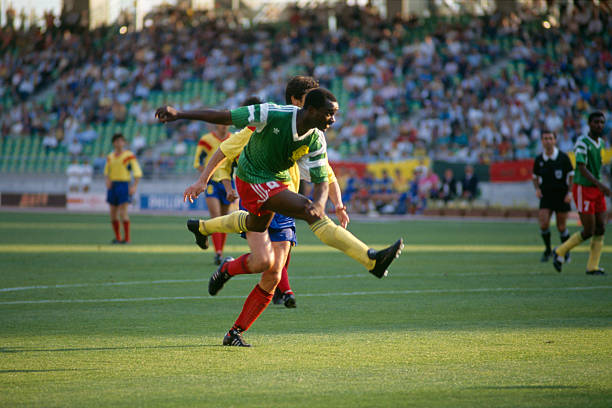
If the youngest record belongs to soccer’s most famous name, the oldest belongs to one of its most beloved. Cameroon’s Roger Milla was 42 years and 39 days old when he scored against Russia at the 1994 World Cup in the United States.
- Age at his record goal: 42 years, 39 days
The story behind it is better than the record itself. Milla had retired from international soccer, but Cameroon’s president Paul Biya was so taken by his performance in a charity match that he personally persuaded both Milla and the national team coach to bring him to the 1990 World Cup in Italy. He responded with four goals off the bench, dragging Cameroon to the quarterfinals, the furthest any African nation had gone at that point. His dance around the corner flag became one of the defining images of the era.
Four years later, at 42, he came back again. Cameroon lost 6 to 1 to Russia, but Milla scored the consolation goal and pushed his own record beyond anyone’s realistic reach. He remains the oldest player ever to score at a World Cup.
World Cup goals scored after his 38th birthday: 5
The veterans still chasing Milla
Plenty have tried to close the gap, and none have managed it. Portugal defender Pepe is the second oldest scorer in history, heading home against Switzerland at Qatar 2022 at 39 years and 283 days. Then comes Messi’s 2026 entry at 38 years and 357 days, a goal that bumped a very famous name down a spot.
That name is Cristiano Ronaldo. He had sat third on the all time list at 37 years and 292 days, set against Ghana in 2022. Heading into 2026 at 41 years old, Ronaldo was the one man positioned to leap above everyone except Milla. Instead, he extended a five game World Cup scoring drought stretching back to that Ghana goal. The chance is not gone: Portugal still have group games to play, and a single Ronaldo goal would vault him to second behind Milla. The oldest list, unlike the youngest, is still live.
What the two extremes tell us
The contrast between Pelé and Milla is the contrast between two kinds of greatness. One arrived fully formed at 17, a genius who never needed permission. The other refused to leave, willing his body through two more tournaments on technique and instinct alone. Both rewrote what we thought was possible at their age.
What makes these records so durable is the brutal physics of elite soccer. The teenager has to overcome inexperience and nerves. The veteran has to overcome time itself. Most players have a window of maybe a decade where both fitness and opportunity align with a World Cup summer. To score outside that window, at either edge, you have to be exceptional.
So when a Gavi curls one in at 18, or a Messi defies the calendar at 38, you are watching something genuinely rare. The youngest record may never fall. The oldest one has held for more than thirty years. And every four years, a new generation arrives to test them both.