

Just a few years ago, Pierre Sage was far from being a recognizable name in professional soccer. No major playing career, no prestigious coaching job, no obvious path toward the top. A simple goalkeeper in amateur soccer, the French coach spent years working in the shadows, gaining experience in the lower divisions and as an assistant. Today, however, he is in charge of Crystal Palace in the Premier League, having previously managed Olympique Lyonnais and RC Lens.
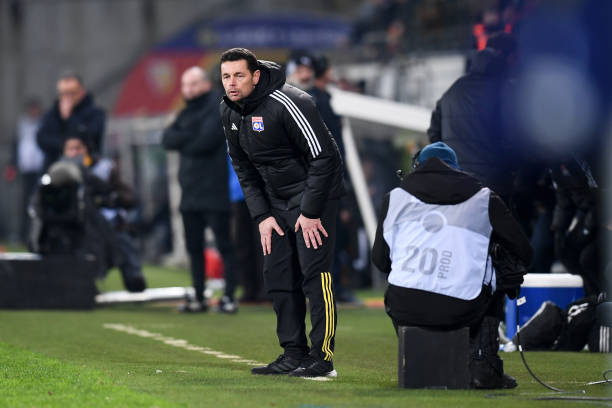
His journey is as unlikely as it is meteoric, built less on status than on an obsession with understanding soccer and communicating his ideas. Originally from the Jura region, Pierre Sage left his hometown at the age of four to move to the Ain department. That is where a story began that, at first, did not seem destined to take him to the biggest stadiums. Sage did not follow the traditional path of coaches who emerge from the highest level of the game. He was not a former international player turned coach, nor a former league star. His career was built in amateur soccer, then at clubs where he gradually learned the different aspects of the profession. In the mid-2000s, while he already held his coaching qualifications before even reaching 30, he met Karim Mokeddem. That meeting would play an important role in his development. Sage then worked at several organizations in the region, including Belley and Oyonnax, before becoming sporting director of Bourg-Péronnas in 2007. For five years, he helped structure the club, developed its youth teams and played a role in the first team’s rise to Ligue 2. His journey then continued at Chambéry, Sedan, Annecy and Annecy-le-Vieux. At Annecy, he notably became assistant coach of the U19 team under Hélder Esteves in 2015-16.
Away from the spotlight, Sage spent his time talking about soccer, thinking about the game and analyzing what could help a player improve. He was also involved in the day-to-day life of the teams, even driving the youth team’s minibus on away trips. An almost ordinary image, but one that sums up the journey of a man who would spend years operating light-years away from the benches of the Premier League. In 2018-19, he reunited with Karim Mokeddem at Lyon-La Duchère. Sage worked as an assistant and was already standing out for his ability to teach. For Ronny Labonne, whom he worked with at the time, he did not simply talk about soccer: he actually taught players how to understand the game. In particular, he gave him the foundations of playing as a right wing-back in a 3-5-2 system. This educational dimension gradually became one of his trademarks. For Sage, coaching is not simply about managing a team on the weekend. It is about making players understand why they should make a particular run, occupy a particular zone or move in a particular way. “Who does what?” is, according to those close to him, one of the questions he knows best how to answer. His tactical approach was notably influenced by the Portuguese tradition and the tactical periodization developed by Vítor Frade. The ball occupies a central place in his vision of soccer, and Sage looks to connect theory with the reality of the field. He completed coaching internships in Spain and Portugal and accumulated experiences that allowed him to develop his own philosophy. Hélder Esteves describes him as a coach who exists between two worlds: theoretical enough to think about the game, but pragmatic enough to confront his ideas with reality. In the summer of 2019, that expertise eventually attracted Olympique Lyonnais. The club entrusted him with its U16 team, a position he held until the beginning of 2022.
He then temporarily left OL to join Red Star as part of Habib Beye’s coaching staff. A few months later, however, he returned to Lyon, this time as director of the academy. That was precisely where his destiny would change. In November 2023, OL was going through a deep crisis. After Laurent Blanc’s departure and then Fabio Grosso’s, Lyon was looking for a solution for its first team. Pierre Sage, who was working at the academy at the time, became an almost improbable option. He had never managed a professional team at the highest level. His name was not that of a coach widely known by the public. But John Textor knew him and had the opportunity to speak with him at length during a visit to Lyon’s academy. Sage initially served as his interpreter, but the conversation quickly shifted toward soccer. Textor discovered a man capable of discussing the game with precision and depth. A few days later, Sage was suddenly placed in charge of OL.
From the save of Lyon to Lens glory and Crystal Palace bench

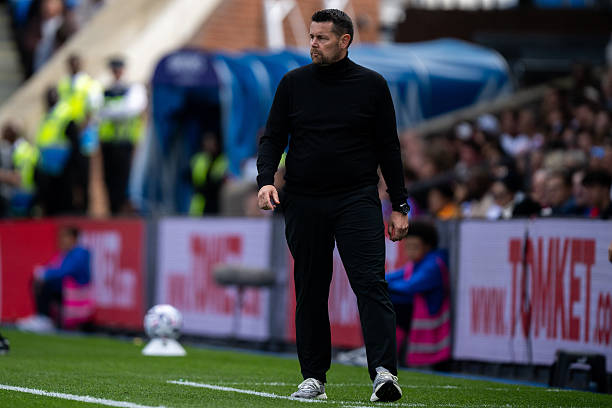
The interim role could have been nothing more than a brief chapter. Instead, it became the beginning of a new life. After two opening defeats against Lens and Marseille, Lyon gradually recovered under his leadership. The group regained its organization, confidence and identity. Above all, Sage managed to create a collective dynamic without relying on an authoritarian approach. His former players describe him as a coach who is close to his squad and heavily involved in their development, but capable of remaining firm when it comes to his principles. He does not seek to play with emotions: he prefers to explain, correct and improve. To everyone’s surprise, OL eventually finished sixth in Ligue 1 and reached the Coupe de France final. The former interim coach was then officially appointed permanent head coach.
What had initially seemed like a series of circumstances was beginning to look like a genuine rise. After leaving Lyon in January 2025, Sage nevertheless had to wait before returning to a bench. A few months later, RC Lens offered him another opportunity. Once again, the choice was surprising: Lens was coming out of a turbulent period, while Sage arrived with the reputation of a coach who was still relatively new at the highest level. But in northern France, his methods took on a new dimension. His team developed a particularly aggressive defensive style, built around its ability to anticipate and win the ball back. During the 2025-26 season, Lens became the team with the most interceptions in Ligue 1, averaging 11.25 per game compared with 9.44 the previous season. Sage embraced that level of risk: for him, defending and attacking are not two completely separate phases. Winning the ball back must already prepare the next action. That philosophy accompanied an exceptional season. Lens finished second in the league and won the Coupe de France, the first in the club’s history. Within a few months, Pierre Sage had gone from a coach still associated with youth development to a manager capable of leading a club to the top of French soccer. His résumé had become strong enough to attract attention from abroad.
In the summer of 2026, Crystal Palace came calling to replace Oliver Glasner. The London club offered him a three-year contract through 2029 and, above all, the opportunity to experience the Premier League. Palace’s decision marked another step in a career that has followed virtually no conventional script. Just a few years earlier, Sage was still driving Annecy’s youth players around in a minibus. Now he finds himself at Selhurst Park, facing the demands of English soccer. But his early days in London immediately showed that moving to another level does not mean the difficulties disappear. Crystal Palace began the season with two defeats, against Everton and then Manchester City, before securing a spectacular first win at Fulham, 3-2, on September 5. Sage nevertheless remained cautious after the victory, believing that his team had not played the way it had hoped to. The following game was more difficult. Against Ipswich, Palace lost 3-2 and had already conceded its 11th goal in four league games, the highest total in the Premier League at that point. That defensive fragility contrasts with the soccer Sage had gradually established at Lens. More importantly, the Frenchman was beginning to impose his methods on a locker room he had only just taken over. His decision to leave Jaydee Canvot out of the squad against Ipswich reportedly irritated chairman Steve Parish, according to several British media outlets relayed in France. Sage stood by a decision he considered purely sporting, explaining that he expected greater commitment from his young defender. Ultimately, the situation illustrates what has accompanied Pierre Sage throughout his career: a journey built on gambles, unexpected decisions and abrupt changes in status. From an amateur goalkeeper to a sporting director in the lower divisions, from a youth coach at OL to the manager of a historic French club, and then from Lens to Crystal Palace, his story has been built far from the well-trodden paths. His arrival in the Premier League is therefore not simply that of another French coach in English soccer. It represents the provisional culmination of a journey that began in the shadows, shaped by youth development, teaching and a constant obsession with the game. And if his first months at Palace already promise to be eventful, they represent another chapter in a story that, just a few years ago, seemed simply impossible.
 Crystal Palace
 Lyon
Lyon