

With just days to go before PSG and Arsenal battle for the most prestigious competition in European soccer, anticipation is steadily building around a new Champions League final that could enter history. The 21st century has already delivered legendary matchups. Tactical masterclasses that became absolute references, completely unreal storylines, dynasties establishing themselves, and games where soccer seemed to defy all logic. Here is our ranking of the five greatest Champions League finals of the 21st century.
This piece is part of our full library of all-time classics.
5 And Robben arrived
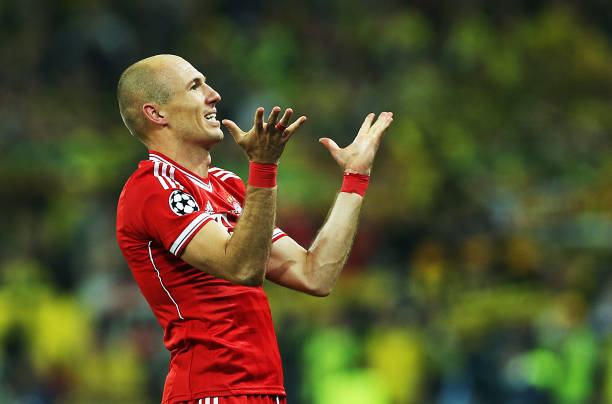
German soccer was emerging from an exceptional rebuilding period. After years dominated by Spain and the Premier League, the Bundesliga had reclaimed its place at the top of European soccer. And what could have been more symbolic than an all-German final at Wembley between Bayern Munich and Dortmund?
On one side, Jupp Heynckes’ Bayern arrived desperate for redemption. A year earlier, the Bavarians had lost the final at home against Chelsea in traumatic fashion. On the other side, Dortmund represented freshness, intensity, and the relentless pressing system imagined by Jürgen Klopp. This young and spectacular team had captivated all of Europe.
The match began at a suffocating pace. Dortmund pressed extremely high and completely disrupted Bayern for nearly half an hour. Goalkeeper Manuel Neuer produced several huge saves against Lewandowski, Reus, and Błaszczykowski. Bayern suffered, but survived. Then gradually, the Munich machine imposed its physical dominance.
As often happens in big games, the match turned on small details. In the 60th minute, Mario Mandžukić opened the scoring after exceptional work from Franck Ribéry. Wembley erupted. But Dortmund never died. Minutes later, İlkay Gündoğan equalized from the penalty spot after Dante fouled Reus.
The final then became unbearable. Every acceleration felt capable of changing history. And finally, in the 89th minute, Arjen Robben permanently entered Bayern legend. Long criticized for his failures in major moments, the Dutchman combined with Ribéry before delicately chipping the ball past Weidenfeller. Wembley exploded.
That goal changed everything in Bayern’s history. A few weeks later, the club completed a historic Bundesliga-DFB Pokal-Champions League treble. For Robben, it was massive redemption after years of criticism. As for Dortmund, despite the defeat, this final symbolized the romantic peak of Klopp’s soccer before the gradual dismantling of his team.
This final may not have delivered the craziest script ever, but it offered rare tactical and emotional intensity. Two German philosophies, two exceptional teams, and an unlikely hero in the dying seconds: everything a great final should provide.
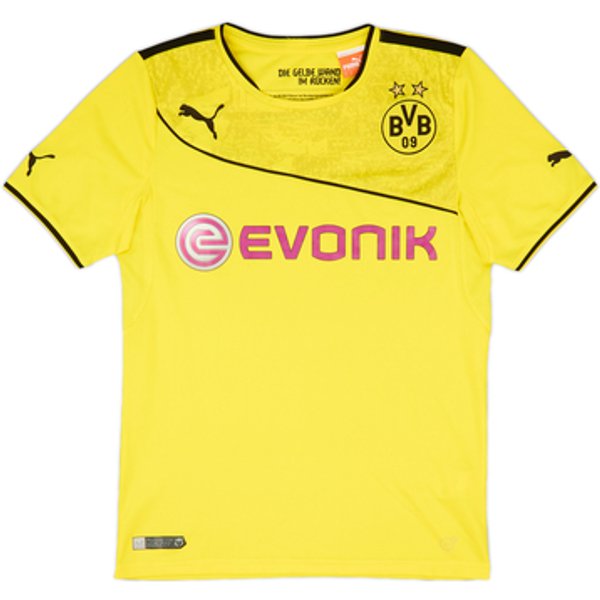
4. After Moscow, it come Munich
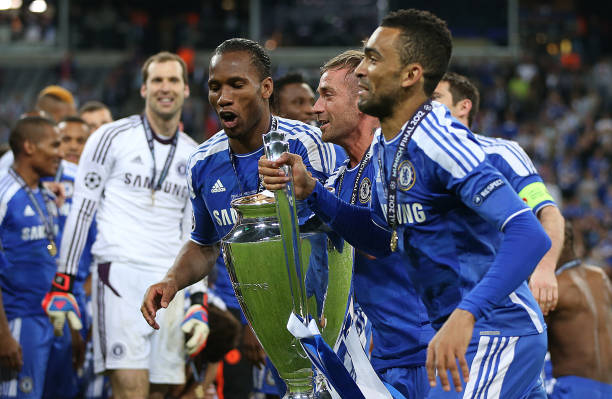
Some teams win the Champions League because they dominate Europe. Others win it because they refuse to die. Chelsea in 2012 clearly belonged to the second category.
That European campaign felt like a permanent miracle. Chelsea entered the spring of 2012 in crisis. André Villas-Boas had been fired, and Roberto Di Matteo inherited an aging squad that seemed to be reaching the end of its cycle. Yet against all odds, the Blues eliminated Napoli, Benfica, and especially Guardiola’s great Barcelona in a legendary semifinal.
The final in Munich, however, looked impossible. Bayern were playing in their own stadium, the Allianz Arena. Everything seemed written for a Bavarian triumph. Especially when Thomas Müller opened the scoring in the 83rd minute after a long attack-versus-defense battle.
For 88 minutes, Chelsea suffered. Drogba defended inside his own penalty area, the Blues barely saw the ball, and Petr Čech produced miracle after miracle. Then came the immortal moment.
Corner for Chelsea in the 88th minute. Juan Mata stepped up. Didier Drogba rose into the air and powered a monstrous header past Neuer. On England’s only real chance of the game, Chelsea equalized.
Soccer suddenly became irrational.
In extra time, Drogba gave away a penalty on Ribéry. Robben stepped up. Petr Čech saved it. The shootout approached, and the Allianz Arena began to doubt. Bayern still led during the penalties, but Chelsea came back once again. Until the final kick.
Didier Drogba stepped forward. Perfect finish. Chelsea were champions of Europe.
This final transcends sports because it represented the culmination of an entire generation. For nearly a decade, Chelsea had obsessively chased the Champions League. Lampard, Terry, Čech, Drogba, and Ashley Cole had experienced everything: painful semifinals, refereeing controversies, Moscow 2008, and John Terry’s infamous slip.
Munich felt almost mystical. A tired, dominated, objectively inferior team somehow survived every critical moment. That night perfectly symbolized the cruelest and most beautiful side of the Champions League.
And ultimately, beneath the Bavarian rain, Chelsea transformed years of suffering into eternity.

3. Hard fight in Roma
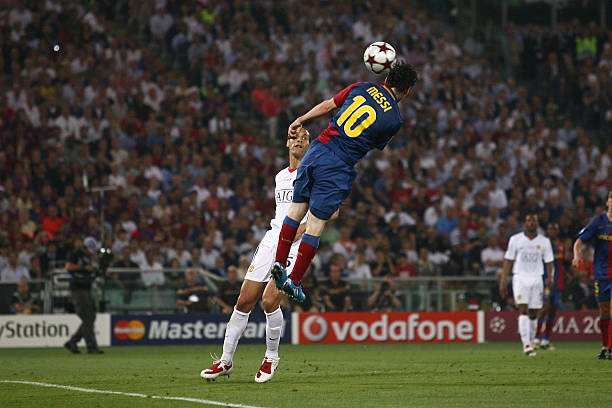
On May 27, 2009, at Rome’s Stadio Olimpico, European soccer permanently entered a new era. This final between Barcelona and Manchester United featured the two best teams in the world. On one side stood the defending European champions led by Cristiano Ronaldo. On the other, a Barcelona side undergoing revolution under Pep Guardiola and a little Argentine genius named Lionel Messi.
That night, possession soccer became art.
The opening stages actually favored United. Cristiano Ronaldo tested the Barça defense several times, and the Catalans looked nervous. But everything changed in the 10th minute when Samuel Eto’o opened the scoring after a quick move. From that moment on, Barcelona completely took control of the ball… and the game.
Xavi, Iniesta, and Busquets suffocated Manchester United in midfield. Barcelona’s pressing prevented any English buildup. Guardiola imposed total territorial domination against the reigning English and European champions.
Then came the symbolic image of the final: Lionel Messi scoring with a header against Rio Ferdinand and Nemanja Vidić. An almost absurd scene considering the Argentine was not known for aerial dominance. But that goal also represented Messi’s definitive arrival into another dimension.
This final was crucial in modern soccer history because it validated Guardiola’s revolution. Barcelona didn’t just win: they completely dominated the defending European champions with a radical soccer philosophy. Tiki-taka became the new global reference point.
That season, Barça completed a historic treble. But beyond trophies, this team permanently changed how soccer was understood. Ball possession became a defensive weapon, collective pressing became central, and Messi began to emerge as the future greatest player ever.
Rome 2009 was more than a final: it was the beginning of a dynasty.
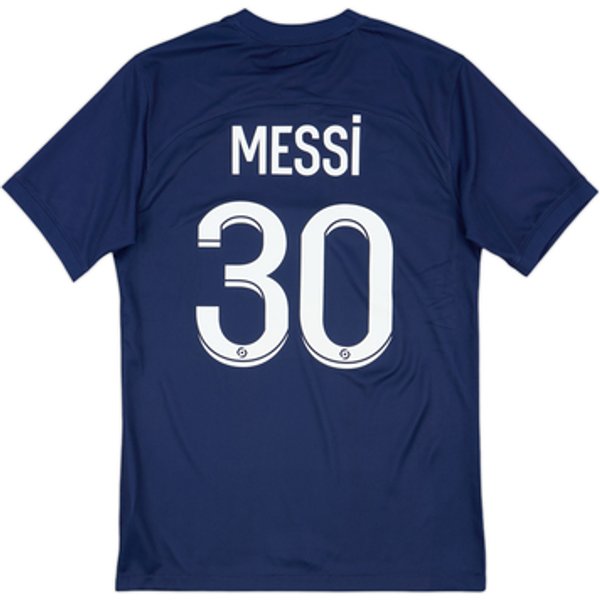
2. London’s revenge ?
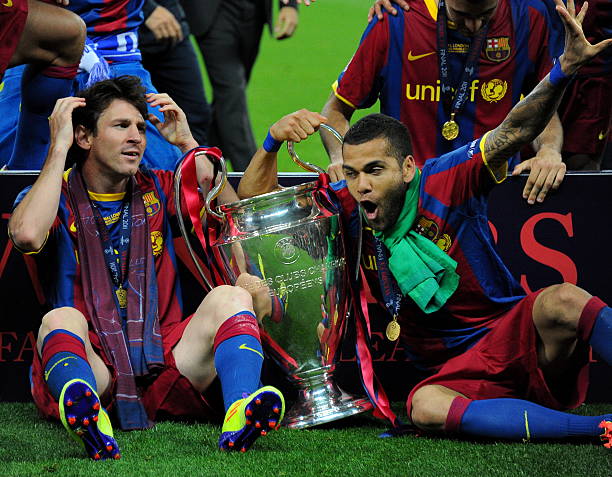
Two years later, same matchup, same nearly perfect stage. Barcelona faced Manchester United again at Wembley. This time, however, Barça no longer came to surprise anyone. They came to confirm that they might be the greatest team of all time.
And the final felt like an absolute demonstration.
Manchester United actually started well, driven by English intensity and the desire to pressure Barça aggressively. But gradually, the Catalans imposed their relentless rhythm. Pedro opened the scoring after a magnificent team move. Rooney equalized and briefly gave the impression of a balanced contest.
In reality, Barça then accelerated like few teams ever have in a final.
Xavi and Iniesta seemed to control every inch of the field. Sergio Busquets dictated the tempo with almost unreal composure. And at the center of this symphony, Lionel Messi produced perhaps the defining European performance of his career.
His goal, a long-range strike that surprised Van der Sar, practically buried United. David Villa later added a masterpiece into the top corner. Final score: 3-1. But the result almost flattered Manchester United given the enormous technical gap.
After the match, Sir Alex Ferguson himself admitted he had faced the best team he had ever seen.
This 2011 final represented the peak of Guardiola’s Barcelona. In 2009, the Catalans had announced their dominance. In 2011, they sanctified it. Rarely has a team so thoroughly controlled a Champions League final against such a prestigious opponent.
Barça’s soccer reached an aesthetic level rarely seen since. Every buildup sequence, every triangle, every off-ball movement looked choreographed. And above all, this team won without ever abandoning its principles.
1. Istanbul’s miracle
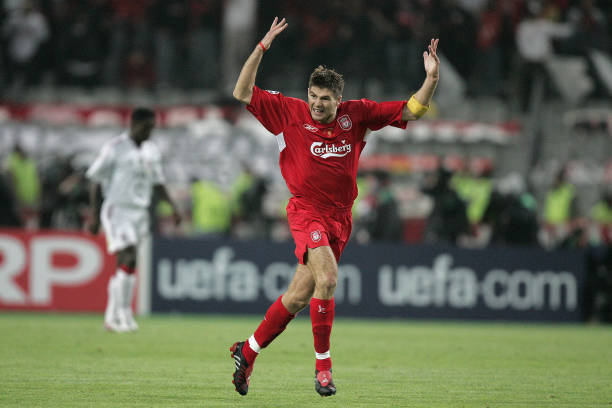
No other final could possibly occupy this spot.
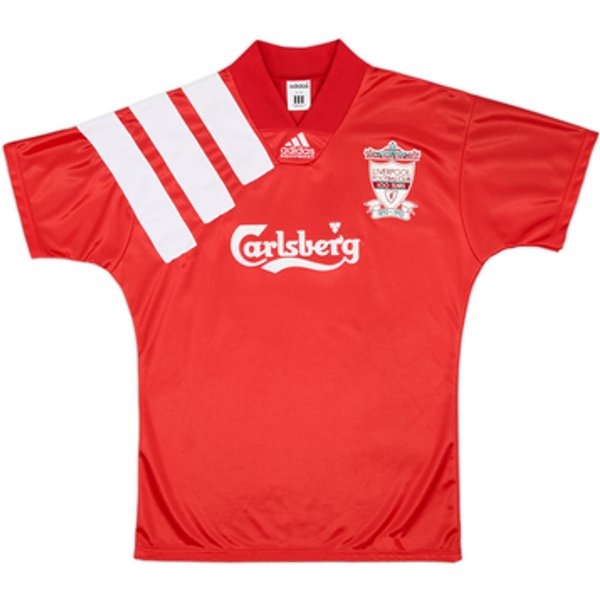
On May 25, 2005, at Istanbul’s Atatürk Stadium, Liverpool faced AC Milan. On one side stood an Italian team filled with legends: Maldini, Pirlo, Kaká, Nesta, Shevchenko, Crespo. On the other, a courageous Liverpool side considered vastly inferior.
And for 45 minutes, the game looked like an execution.
Paolo Maldini scored after less than a minute. Hernán Crespo added a brace. Milan played magnificent soccer. Kaká danced between the lines, and Liverpool looked completely overwhelmed. At halftime, the score was 3-0. The final seemed over.
But soccer sometimes writes stories no screenwriter would dare invent.
In the 54th minute, Steven Gerrard scored with a header. One minute later, Vladimír Šmicer added another. Then Xabi Alonso converted the rebound after Dida saved his penalty.
In six minutes, Liverpool came back from 3-0 to 3-3.
The stadium became surreal. Milan looked psychologically destroyed. Liverpool now played fueled by something beyond soccer itself. In extra time, Jerzy Dudek somehow denied Shevchenko from point-blank range. Then came the penalty shootout.
Dudek danced on his line. Milan collapsed. Shevchenko saw his penalty saved. Liverpool won their fifth European Cup.
Istanbul instantly became legend because it contained everything that makes soccer unique: drama, unpredictability, impossible resurrection, and the sport’s absolute emotional power.
That final also transformed the legacy of many players. Gerrard became a living god at Liverpool. Benítez entered club history. And despite the defeat, that Milan team paradoxically remains associated with one of the greatest finals ever played.
More than twenty years later, Istanbul remains the ultimate reference point. Proof that in the Champions League, nothing is ever truly over. Even when everything appears lost.
 AC Milan
 Chelsea
 Liverpool
 Manchester United
 Dortmund