

Few national teams possess a history as rich as the Netherlands without ever having won the World Cup.
Runners-up in 1974, 1978, and 2010, the Oranje have given football some of its most iconic teams, from Johan Cruyff’s “Total Football” to the generations of Dennis Bergkamp, Wesley Sneijder, and Arjen Robben. Yet despite their enormous influence on the evolution of the game, the Dutch are still waiting for their first world title.
As the 2026 World Cup approaches, the Netherlands arrive with legitimate ambitions. While they do not carry the favorite status enjoyed by France, Spain, or Argentina, they are among the tournament’s most credible dark horses. Ronald Koeman has assembled a balanced squad that combines the experience of Virgil van Dijk and Frenkie de Jong with the emergence of a new generation led by Xavi Simons, Ryan Gravenberch, and Bart Verbruggen. The prevailing feeling is that this team has the tools to make a deep run, provided it can finally break through the glass ceiling that has so often accompanied the Oranje at major tournaments.
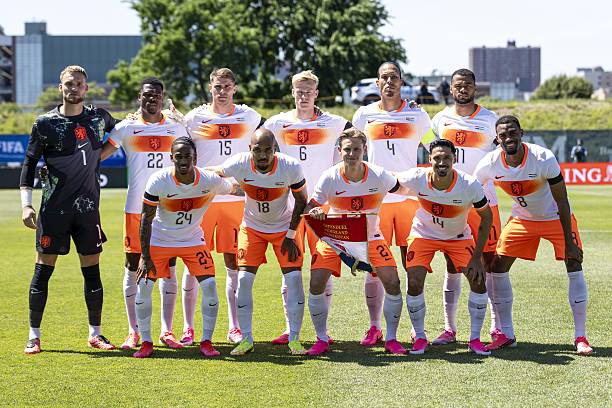
The group :
The Netherlands will compete in Group H alongside:
- Japan
- Sweden
- Tunisia
On paper, the Dutch enter as favorites to win the group. Japan is expected to be their main rival for first place, while Tunisia appears to be the least threatening opponent. Sweden, meanwhile, remains difficult to predict and will look to capitalize on its recent defensive solidity and the explosive attacking partnership of Alexander Isak and Viktor Gyökeres to spring a surprise.
The objective is clear: finish first in the group and avoid a difficult path in the Round of 32. After reaching the quarterfinals in Qatar in 2022 and the semifinals of Euro 2024, the Oranje are hoping to confirm their return among world football’s elite powers.
Key players
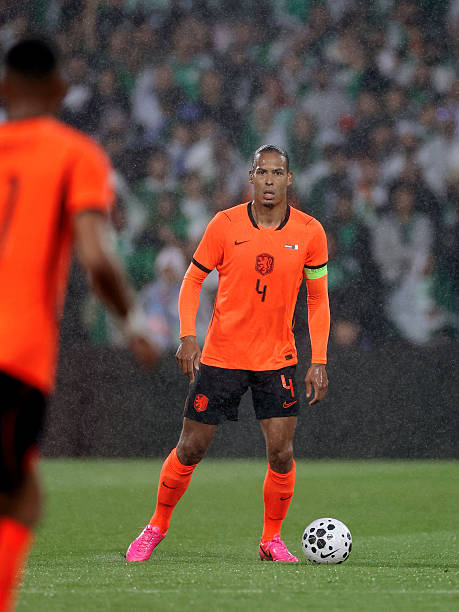
Virgil van Dijk
At 34 years old, the captain is likely playing in his final World Cup.
Although he no longer possesses quite the same explosiveness that defined his peak years at Liverpool, Van Dijk remains the unquestioned leader of this national team. His experience, natural authority, and reading of the game continue to make him one of the most respected defenders in world football.
For the Netherlands, his presence is essential. He represents the bridge between generations and embodies a team that has learned how to better manage pressure-filled moments.
Frenkie de Jong
The brain of the team.
For several years now, Frenkie de Jong has been considered the most important player in the Dutch setup. His ability to play out under pressure, break lines through passing or ball carrying, and control the tempo of a match makes him the centerpiece of Ronald Koeman’s system.
Many analysts believe that a large portion of Dutch hopes will depend on his ability to dictate the rhythm against the strongest teams in the tournament.
Ryan Gravenberch
If one player symbolizes the new Dutch generation, it is probably him.
After several years of steady development, Gravenberch has finally reached maturity during the last two seasons at Liverpool. His box-to-box profile perfectly complements De Jong’s and provides greater balance in the Dutch midfield.
His ability to cover ground, progress the ball, and contribute on both sides of the game could prove invaluable in a long tournament.
Cody Gakpo
Already outstanding at the 2022 World Cup, Gakpo remains the team’s primary attacking reference.
His versatility allows him to operate across the entire front line, while his efficiency in front of goal is one of the Oranje’s greatest strengths. Ronald Koeman will rely on him to make the difference in tight matches where every opportunity matters.
At 27, he is likely entering the prime of his career.
Even when struggling at Liverpool, the national team has remained one of his favorite stages, and he will be eager to build on the excellent form he displayed at Euro 2024.
The face of Netherlands in 2026
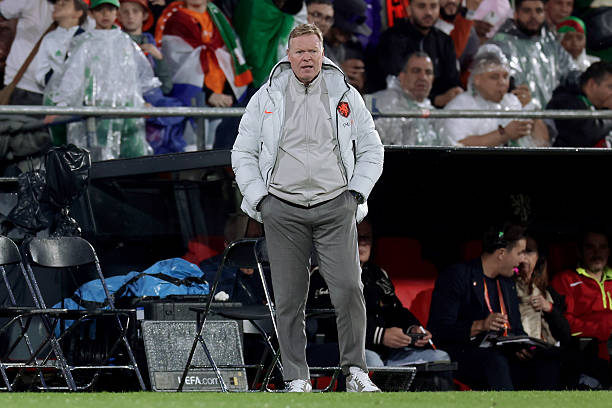
The Netherlands enter this World Cup in an intriguing position.
Over the last two years, Ronald Koeman has gradually built a team that is more mature and better balanced. The days when the Oranje relied solely on attacking talent seem to be over. The 2026 version appears more structured, featuring a solid defensive foundation around Van Dijk, technical control through Frenkie de Jong, and multiple attacking options capable of deciding a match.
One of the Dutch team’s greatest strengths lies in the complementarity between generations. The experienced leaders remain highly effective, while players such as Crysencio Summerville, Ryan Gravenberch, Jorrel Hato, Jan Paul van Hecke, and Bart Verbruggen bring freshness, energy, and dynamism.
The squad’s depth is also worth highlighting. Koeman has several options in every area of the field, a luxury the Netherlands have not always enjoyed in recent years. That depth could become a decisive advantage in a long tournament where injuries and fatigue often play a major role.
However, some questions remain.
As is often the case with the Oranje, the true test will come in the knockout rounds. The Netherlands have regularly demonstrated their ability to compete with the world’s best teams but have often fallen short when it came time to clear the final hurdle. The defeats in the 1974, 1978, and 2010 finals remain deeply embedded in Dutch football’s collective memory.
Can this generation finally put an end to that curse?
The answer will largely depend on its ability to turn talent into efficiency when the pressure reaches its highest level.
One thing is certain: the Netherlands arrive in North America with far more certainty than they had before previous tournaments. While they are not among the favorites, they possess enough quality to dream of a run all the way to the semifinals.
And perhaps, at long last, of that first star still missing from the jersey of one of the greatest football nations in history.
 Netherlands
 Virgil van Dijk