

In the shadow of South America’s historic giants—Brazil, Argentina, and Uruguay—Ecuador has gradually established itself as one of the continent’s most formidable nations.
Long regarded as an outsider in South American football, La Tri has reached a new dimension over the past decade. Having already appeared at the World Cups in 2002, 2006, 2014, and 2022, Ecuador has now firmly cemented its place among CONMEBOL’s most competitive teams. Its qualification for the 2026 World Cup surprised nobody. Despite beginning the qualifying campaign with a three-point deduction, Ecuador finished among South America’s top teams thanks to a remarkable defensive structure and a generation that has now reached maturity.
This team may not generate as much attention as a rebuilding Brazil or a reigning world champion Argentina, but it has become one of the most difficult sides on the planet to face. As several observers have pointed out, Ecuador currently possesses one of the strongest defensive units in international soccer.
As the North American World Cup approaches, ambitions are high. Ecuador no longer wants to simply participate—it wants to confirm its status as a new power in South American football.
The group
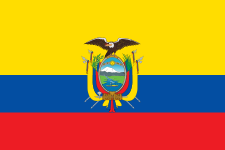
Ecuador will compete in Group E alongside:
- Germany
- Ivory Coast
- Curaçao
It is a particularly open group behind Germany.
Die Mannschaft enters as the logical favorite thanks to its experience and the depth of its squad. Behind them, however, the battle for qualification is expected to be extremely tight between Ecuador and Ivory Coast, two national teams carrying genuine ambitions into this World Cup.
As for Curaçao, making its debut at this level, it will attempt to play the role of spoiler.
For Sebastián Beccacece’s men, the showdown with Ivory Coast could already feel like a knockout match before the knockout stage officially begins. South American observers have identified this contest as one of the most evenly matched fixtures of the opening round.
Key players
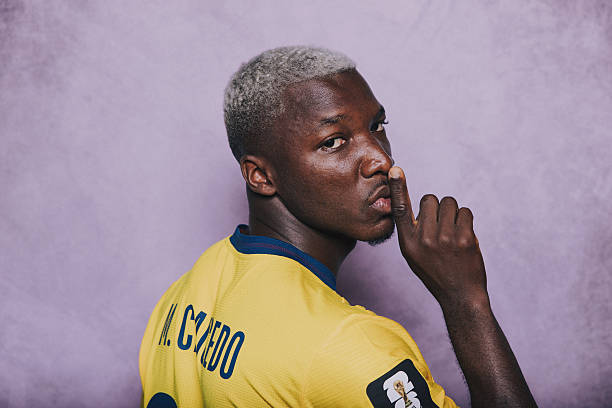
Moisés Caicedo
The heartbeat of this team.
Over the last several years, Caicedo has become the symbol of Ecuadorian football’s rise. After establishing himself among the world’s elite defensive midfielders at Chelsea, he has grown into the technical and emotional leader of the national team.
His endless energy, ball-winning ability, and capacity to break opposition lines make him the most important player in Sebastián Beccacece’s system. His shooting ability has also become an increasingly valuable weapon.
At just 24 years old, he is entering the prime years of his career and represents one of Ecuador’s greatest hopes of producing a historic World Cup run.
Piero Hincapié
The leader of the defense.
Fast, aggressive, and remarkably composed in possession, Hincapié has established himself as one of the best South American defenders of his generation.
His importance is vital for a team whose identity is built largely upon defensive solidity. Alongside Willian Pacho, he could form arguably the best central defensive partnership in South America outside of Uruguay’s. However, at this World Cup he is expected to feature on the left side, where he could face dangerous opponents such as Amad Diallo or Leroy Sané. His role will remain just as crucial.
Willian Pacho
The ultimate insurance policy.
Following his standout performances with Paris Saint-Germain, the reigning two-time European champions, Pacho has become one of the most sought-after defenders in world football. Powerful in duels, dominant in the air, and exceptionally consistent, he provides the perfect complement to Club Brugge standout Joël Ordóñez.
Together, they embody Ecuador’s greatest strength: a defense capable of competing with any attacking unit at the World Cup.
Kendry Páez
The jewel of Ecuadorian football.
If there is one player capable of electrifying this World Cup, it might be him.
Still a teenager not long ago, Kendry Páez has for years been regarded as Ecuador’s brightest prospect. His technical brilliance, creativity, and ability to create opportunities in tight spaces evoke comparisons with some of South America’s great playmakers.
The 2026 World Cup could be the tournament that introduces him to a global audience. And it may need to be, because his career has already entered a difficult phase. Signed by Chelsea, the young midfielder was loaned to Strasbourg, but the move was reportedly cut short due to behavioral issues. He will need to reverse that trend and return to the upward trajectory that once seemed destined to carry him to the very top of the game.
The face of Ecuador in 2026
Ecuador arrives in the United States carrying one of the most intriguing trajectories in South American football.
The qualification campaign demonstrated the maturity acquired by this generation. Despite the three-point deduction imposed before qualifying began, La Tri finished ahead of several historic continental powers and secured qualification without experiencing any major scares.
That achievement perfectly summarizes the progress made in recent years.
Under Sebastián Beccacece, appointed following the departure of Félix Sánchez Bas, the team has maintained its defensive rigor while developing more attacking solutions. The Argentine coach has built an extremely coherent collective around a spine consisting of Hernán Galíndez, Piero Hincapié, Willian Pacho, Moisés Caicedo, and Enner Valencia.
Yet Ecuador’s greatest strength remains its defense.
As numerous South American analysts have noted, very few teams in world football currently possess a central defensive partnership as complementary as the one formed by Hincapié and Pacho. That solidity allows Ecuador to approach every match with the confidence that it can compete physically and tactically against any opponent.
But this team is no longer solely focused on defending.
The emergence of players such as Kendry Páez and John Yeboah has brought a level of creativity that was sometimes missing in previous tournaments. Up front, the experience of Enner Valencia continues to provide a valuable guarantee when the stakes are highest.
According to several South American media outlets, Ecuador could be one of the most dangerous dark horses at this World Cup. Its squad may receive less attention than those of Germany or France, but its collective cohesion and tactical stability make it an exceptionally difficult team to eliminate.
The stated objective is to reach at least the Round of 16, but many believe this generation possesses the tools to go much further.
Long considered little more than a guest on football’s biggest stage, Ecuador has become a continental benchmark.
And in 2026, La Tri intends to prove that its place among South America’s elite is no longer a surprise.
 Ecuador