

Soccer has always been a family business, but the 2026 World Cup pushed that idea somewhere new. Across the tournament in the United States, Mexico, and Canada, four pairs of brothers arrived wearing different flags. Same blood, same dinner tables growing up, different anthems on the morning of kickoff. It is one of the quietest and most human subplots of the entire summer, and it tells you almost everything about how globalized the modern game has become.
There is precedent, though not much. The most famous case came in 2010, when Germany’s Jérôme Boateng faced his older brother Kevin-Prince, who had chosen Ghana. They met again in 2014, two players who shared a mother but carried different surnames and different passports onto the same field. For sixteen years that was the headline act of World Cup sibling rivalry. The 2026 edition blew the category wide open.
- Pairs of brothers representing different nations at the 2026 World Cup: 4
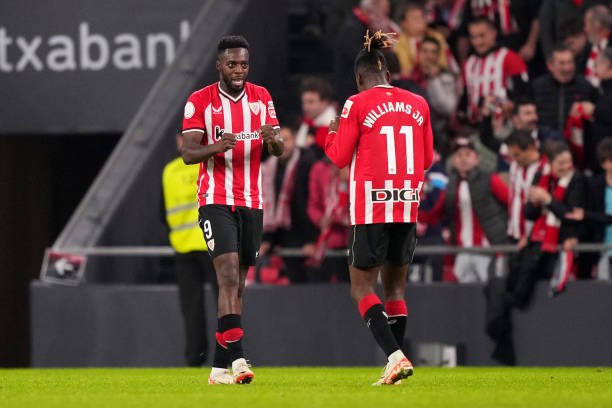
The Williams brothers, Ghana and Spain
The highest profile story belongs to Iñaki and Nico Williams. Both were born in the Basque Country in northern Spain, both came up through the same youth pipeline, and both play their club soccer for Athletic Bilbao. Yet when the World Cup arrived, Iñaki pulled on the white of Ghana while Nico wore the red of Spain.
Iñaki made the choice that defined the family. He earned a single senior cap for Spain back in 2016, then waited, and waited, for a recall that never came. When the Ghana Football Association came calling, the federation of his parents’ homeland, he said yes. He has described the switch as a way of getting closer to his roots, and his grandfather reportedly told him it would be a dream to see him in the jersey.
Nico took the path his brother could not. The younger Williams became a star for Spain, scoring during the run to the Euro 2024 title and earning man of the match honors in the final win over England. Two brothers, one club, two national teams, and a story that still feels gently surreal every time both names appear in different lineups.
- Senior Spain cap earned by Iñaki before switching to Ghana: 1
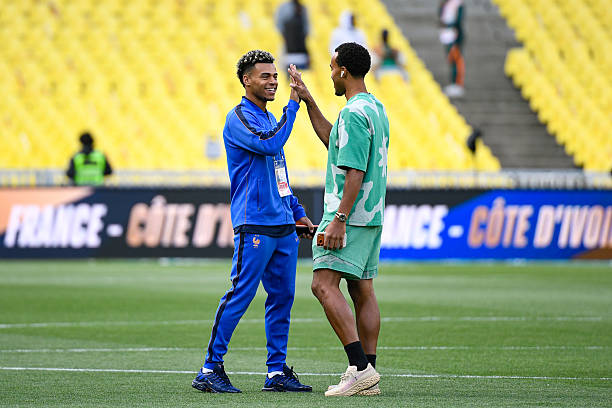
The Doué brothers, France and Côte d’Ivoire
If the Williams pairing is the emotional center, the Doué brothers might be the pairing most likely to actually meet. Désiré and Guela were both born in Angers to a French mother and an Ivorian father, and both have risen fast. Désiré, the younger of the two, became one of France’s most exciting attackers and lifted the Champions League with Paris Saint-Germain. Guela, a right back for Strasbourg, committed to Côte d’Ivoire, the country of their father’s birth.
The brothers got a preview of the strangeness before the tournament even began. In a warm up friendly in June, Côte d’Ivoire beat France 2-1, and it was Guela who opened the scoring against his little brother’s team. He laughed about the teasing afterward, then reminded everyone that family comes first. With the way the bracket fell, France and Côte d’Ivoire could yet collide in the round of 32, which would make Désiré and Guela only the second set of brothers ever to face each other at a World Cup.
- Goal scored by Guela against France in their June friendly: 1
The Souttar brothers, Australia and Scotland
The Souttar story is pure geography and circumstance. Harry and John were both born in Aberdeen and both learned the game at Dundee United. John stayed loyal to Scotland, the country of his birth, and earned his place as a reliable center back now plying his trade at Rangers. Harry, also a towering center back, qualified for Australia through their mother and committed to the Socceroos in 2019 after Scotland passed him over at youth level.
Harry has hardly looked back since. He captained Australia in their opening group stage win and has become a fixture of the side. John, meanwhile, reached his first World Cup with Scotland after years of waiting. Two brothers from the same northeastern Scottish city, separated by one parent’s birthplace and a selection decision that quietly reshaped both their careers.
- International caps for Harry Souttar with Australia: 38
Brian Brobbey and Derrick Luckassen, the history makers
Save the best for last. Brian Brobbey and Derrick Luckassen share a mother but have different fathers, which is why so many fans never realized they were related. Both were born in the Netherlands to a family of Ghanaian heritage. Brobbey, a powerful striker now at Sunderland, came through the Dutch youth ranks and made his senior Netherlands debut in 2023. Luckassen, a versatile defender at Cypriot champions Pafos, also represented the Dutch at youth level before committing to Ghana, earning his senior debut against Germany in March 2026 and arriving in the squad late as defensive injuries piled up.
Then the two of them did something no brothers had ever done. Both scored at the same World Cup, for two different countries. Brobbey found the net three times for the Netherlands, while Luckassen scored in Ghana’s 2-1 group stage loss to Croatia. That made them the fifth set of siblings to score at a World Cup, the first pair to manage it in nearly thirty years, and the first ever to do it wearing two separate flags.
- Brother pairs in World Cup history to score for two different countries: 1, the first ever
What it all says about the modern game
What ties these four families together is not rivalry. It is migration, identity, and choice. Parents who crossed borders to build new lives, sons who grew up eligible for more than one flag, and a tournament finally big enough to hold all of it at once. Forty eight teams meant more squads, more places, and more room for stories like these to surface in the same summer.
You could call it a coincidence, four pairs landing at one World Cup. It feels more like a sign of where soccer is heading. The borders on the map and the borders in a family no longer line up the way they once did, and the game is richer for it. The 2026 World Cup will be remembered for plenty. The brothers who walked out on opposite sides of the same dream deserve a chapter of their own.
 Brian Brobbey
 Desire doue
 Nico Williams