

Four years after helping buy Chelsea from Roman Abramovich, Todd Boehly and Mark Walter are leaving the ownership group of the London club. The two American billionaires have agreed to sell their stakes to Clearlake Capital, already the majority shareholder of the Blues, allowing the American investment firm to take full control of the club. The deal represents more than just a change in governance: it comes after four years of massive investment and significant spending in the transfer market, while Chelsea has just recorded the largest pre-tax loss in Premier League history.
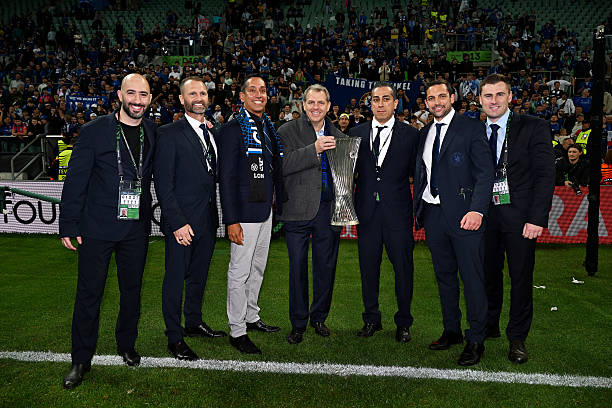
Four years after a £2,5 billion takeover
To understand this sale, it is necessary to go back to the spring of 2022. Following the sanctions imposed on Roman Abramovich after Russia’s invasion of Ukraine, Chelsea was put up for sale by the British government. A consortium bringing together Clearlake Capital, Todd Boehly, Mark Walter and Hansjörg Wyss ultimately won the process for around £2.5 billion, alongside additional investment commitments in the club and its infrastructure. Clearlake then became the majority shareholder with a 61.5% stake, while Boehly, Walter and Wyss each held around 12.8%.
The ownership structure, however, was more complex than a simple division of shares. Despite its majority stake, Clearlake did not initially have absolute operational control. Todd Boehly became the public face of the consortium and chairman of Chelsea, while Behdad Eghbali and José E. Feliciano increasingly represented Clearlake’s power within the club. This structure eventually became a source of disagreement, particularly over sporting strategy and the future of Stamford Bridge. Discussions over a potential buyout of Boehly and Walter’s stakes therefore continued for nearly two years before accelerating in 2026.
Financially, the four years under the new ownership have been particularly expensive. Chelsea has completely overhauled its squad since 2022 and has also invested in its Cobham training ground, academy, medical facilities and the club’s various teams. That strategy, however, has come at a considerable cost. For the 2024-25 financial year, Chelsea recorded a £262.4 million pre-tax loss, a record for a Premier League club. At the same time, revenue reached £490.9 million, its second-highest level ever, with income expected to rise further thanks in particular to the club’s run at the Club World Cup and significant player sales.
£950 million for a 25% stake
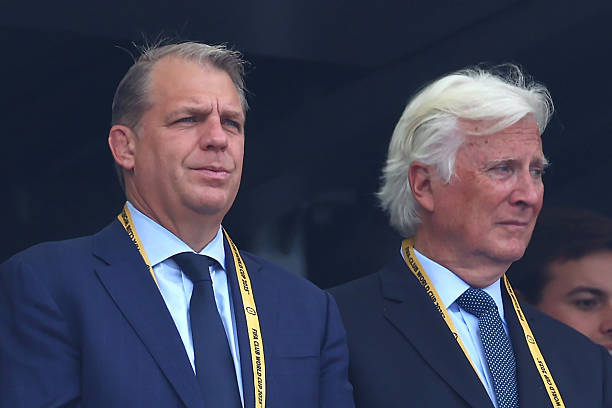
It is against this backdrop that the September 2026 transaction takes place. Todd Boehly and Mark Walter are jointly selling around 25% of Chelsea to Clearlake Capital. The club has not officially disclosed the value of the deal, but the Financial Times reports that the two men are expected to receive around £950 million in cash, or close to €1.1 billion, based on a Chelsea valuation of around £5 billion including debt.
The figure is particularly significant when compared with the price paid four years earlier. The consortium acquired Chelsea for around £2.5 billion in 2022. The valuation used in 2026 is therefore roughly twice that amount, although the two figures are not strictly comparable since one represents an acquisition price while the other is a valuation that includes the club’s debt. According to the Financial Times, Chelsea’s debt stood at just under £1.4 billion in June 2025. The £5 billion valuation should therefore be understood as the club’s overall enterprise value rather than the amount going directly to its shareholders.
The transaction is even more notable because Chelsea is simultaneously reporting substantial accounting losses. The club lost £262.4 million before tax in the 2024-25 financial year, even as revenue rose to £490.9 million. This situation illustrates the gap that can exist between a soccer club’s annual profitability and its market value: a sports business can post heavy losses while maintaining a high valuation because of its commercial revenues, broadcasting rights, sporting potential, player values and the scarcity of Premier League clubs available for purchase.
For Clearlake, the transaction also does not require, according to the Financial Times, taking on new debt to finance the buyout. The firm is expected to use its own capital as well as direct investments from its co-founders, Behdad Eghbali and José E. Feliciano. Once the transaction is completed, Clearlake will own 86.5% of Chelsea, while Hansjörg Wyss will retain 13.5%. The firm, which already owned 61.5% of the club, will therefore move from a majority position to near-total control.
The £5 billion valuation also places Chelsea among the most highly valued clubs in world soccer, although it remains below the valuation recently attributed to Liverpool. Above all, it shows that Chelsea’s losses have not been enough to erase the value of its primary asset: a place within the extremely lucrative economic ecosystem of the Premier League. The club therefore remains an asset capable of being valued at several billion pounds despite reporting an annual accounting loss.
A financial exit that reshapes power at Stamford Bridge
For Todd Boehly and Mark Walter, the transaction also represents a significant financial achievement. The two men are expected to make a gain on their initial investment, although each investor’s exact return cannot be calculated precisely using only publicly available data, particularly because the consortium’s structure and the investments made since 2022 make the calculation more complex. The Financial Times also reports that the sale comes as the two investors seek to unlock cash from several of their assets.
The context is particularly important for Mark Walter, whose sports portfolio recently underwent another major transaction. In August 2026, he sold his majority stake in the Los Angeles Lakers in a deal valuing the NBA franchise at $12.5 billion. The Financial Times also reports that Walter was seeking to raise funds amid difficulties surrounding his insurance business empire. Boehly, who is also a longtime partner of Walter and co-investor in several sports assets, has likewise recently indicated that he would have significant personal liquidity following various asset sales.
The sale of Chelsea therefore also brings an end to a period during which Boehly became one of the most recognizable faces of the club’s ownership. He will step down as chairman of the Blues, while Clearlake will now concentrate power much more clearly in the hands of Behdad Eghbali and José E. Feliciano. Hansjörg Wyss, meanwhile, will remain a minority shareholder. The transaction is expected to be completed by the end of the year.
For Chelsea, the change is therefore as much financial as it is political in terms of internal governance. In 2022, the club was purchased by a consortium made up of several American investors with shared interests but sometimes differing visions. In 2026, Clearlake becomes the almost exclusive owner of the Blues. This new structure could in particular make it easier to make decisions regarding the future of Stamford Bridge and investment in infrastructure, two issues that had fueled disagreements between the various shareholders.
Four years after buying Chelsea for around £2.5 billion, Todd Boehly and Mark Walter are therefore leaving a club valued at around £5 billion, with roughly £950 million to collect from the sale of their stakes. Behind this spectacular transaction, the contrast remains striking: Chelsea is emerging from a period of historic spending and losses, yet remains an asset worth several billion pounds. For Clearlake, the goal now is to turn that financial value into sporting and institutional stability, with almost total control of the London club.
 Chelsea