

For much of the 20th century, Brazil dominated world soccer thanks to a unique model: players were developed in an extremely competitive domestic league before moving to Europe at the peak of their maturity. Between 1958 and 2002, the Seleção won five FIFA World Cups and produced legendary generations featuring Pelé, Zico, Romário, Rivaldo, and Ronaldo. But since lifting the trophy in 2002, Brazil has failed to win another World Cup. That period coincides with a profound transformation of the international soccer market, largely shaped by two landmark events: the 1995 Bosman ruling in Europe and Brazil’s Pelé Law of 1998. While both reforms strengthened players’ rights and modernized labor relations in professional soccer, many observers argue that they also weakened the very ecosystem that had allowed Brazil to become the sport’s greatest nation.
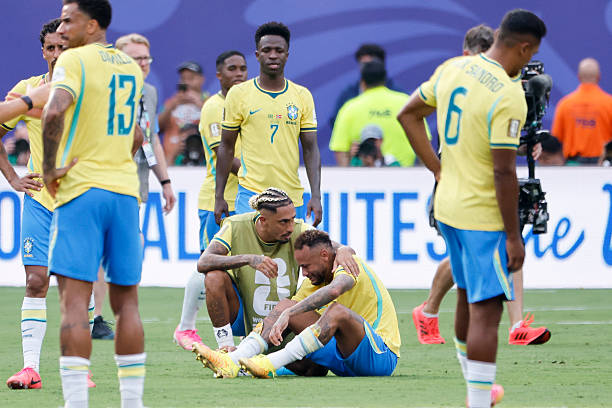
The beginning of soccer’s accelerated globalization
On December 15, 1995, the Court of Justice of the European Union delivered the Bosman ruling. The decision guaranteed freedom of movement for European players within the European Union and eliminated several restrictions that had previously limited international transfers. It immediately revolutionized European soccer.

For Europe’s biggest clubs, the ruling ushered in a new era. Rosters became increasingly international, financial resources expanded dramatically, and the search for elite talent evolved into a truly global enterprise. Brazil quickly emerged as an inexhaustible source of technically gifted and relatively inexpensive players. European scouts dramatically increased their investments across South America and began recruiting players at increasingly younger ages.
The Bosman ruling alone does not explain this transformation. However, it created the conditions for a far more powerful and attractive European market capable of drawing talent from every corner of the world.
In Brazil, this legal revolution found its domestic counterpart with the Pelé Law, adopted in 1998. Inspired by the changes taking place in Europe, the legislation abolished the passe system, which had tied players to their clubs even after the expiration of their contracts. From that point forward, players gained significantly greater freedom of movement, while labor relations became more closely aligned with international standards.
Supporters of the Pelé Law argue that it corrected a longstanding imbalance that had favored clubs at the expense of players and granted footballers long-overdue rights. Luiz Carlos de Araujo Filho, for example, argues that the legislation modernized Brazilian soccer and brought the country into line with global standards. Critics, however, contend that it also stripped Brazilian clubs of much of their ability to retain their best players against the financial might of Europe’s biggest teams.
The early talent exodus that weakned the domestic league

Before the 1990s, most future Brazilian internationals spent several seasons competing at the highest level in the domestic league. Pelé, Zico, Sócrates, Falcão, Romário, and Rivaldo all built their reputations in Brazil before eventually moving to Europe—often only after reaching full maturity.
Since the implementation of the Pelé Law and the expansion of the post-Bosman transfer market, that logic has been completely reversed.
European clubs now recruit teenagers or players who have only recently graduated from youth academies. Brazil’s brightest prospects frequently leave the country before even completing a full season in the top flight. As a result, Brazilian soccer has increasingly become a selling league rather than one capable of consistently retaining its finest talent.
One of the most significant consequences of this exodus has been the relative decline in the technical quality of the domestic game. For decades, Brazilian clubs served as tactical laboratories and developmental environments for future national team stars. Young players learned alongside experienced veterans while competing in highly demanding domestic competitions.
Today, however, club rosters are in a constant state of turnover. Young stars depart almost immediately, while many of the league’s biggest names are veterans returning from Europe toward the end of their careers. This loss of continuity has weakened Brazilian soccer’s ability to collectively develop and preserve a consistent playing identity.
The disappearance of street soccer culture
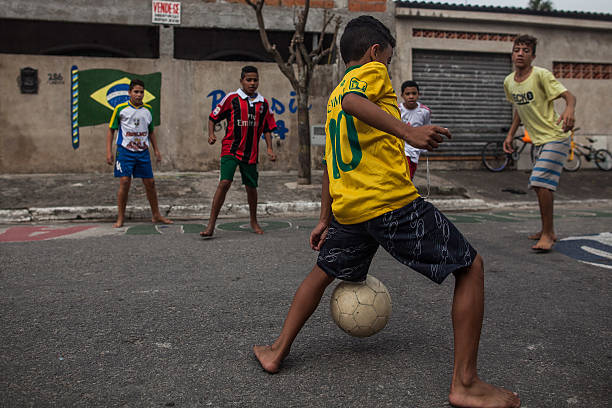
Another frequently cited argument concerns player development itself.
As European clubs recruit players at increasingly younger ages, young Brazilians are now encouraged to meet the demands of the international market as quickly as possible: physical power, tactical discipline, and immediate efficiency.
According to many observers, this evolution has gradually reduced the space available for the spontaneous creativity that historically defined Brazilian soccer. Without suggesting that talent has disappeared, many believe today’s system produces more players tailored to the needs of European clubs than genuine heirs to the tradition of jogo bonito.
A less cohesive Seleçao
The mass migration of Brazilian players has also complicated the work of the national team.
Brazil’s internationals now compete in different leagues under vastly different tactical philosophies. National team camps are brief, making it increasingly difficult to build chemistry and establish consistent on-field relationships.
Paradoxically, this situation has not prevented certain European nations from thriving. France, for example, has successfully transformed the international migration of its players into a competitive advantage. Brazil, however, historically relied on a very different model—one built around the strength and continuity of its domestic championship. The transition to a fully globalized system has proven considerably more difficult.
Bosman and Pelé law : convenient scapegoats or genuine causes ?
It would nevertheless be overly simplistic to attribute nearly a quarter-century of World Cup disappointment solely to these two reforms.
The structural problems within the Brazilian Football Confederation (CBF), governance issues, the tactical evolution of the modern game, the growing strength of European national teams, and soccer’s increasing professionalization have all played major roles in Brazil’s decline.
Even many critics acknowledge that the Pelé Law cannot be considered the sole culprit. Current debates within Brazil demonstrate that youth development, club management, and long-term national strategy are equally important factors.
Even so, the Bosman ruling and the Pelé Law fundamentally reshaped the balance of world soccer. By opening the transfer market further and making it easier for Brazilian talent to move abroad, they helped transform Brazil from a nation that retained its biggest stars into one of the world’s largest exporters of soccer players.
For many Brazilian supporters, that is precisely where the modern paradox lies. Brazil continues to produce some of the finest footballers on the planet, yet it has found it increasingly difficult to build the finest national team in the world.
 Brazil
 Kaka
Kaka Neymar
 Ronaldinho
 Ronaldo Nazário